


Customer data ownership means the business collecting the data acts as the legal controller, while any SaaS vendor storing or processing it acts as a processor bound by contract. That controller role, not a property deed, is what actually grants your business the right to access, export, correct, or delete customer records on demand. Practical control comes from what you can extract from your systems, not from a title on a document. Before signing anything, review your vendor's data processing agreement and terms of service, then run an export test to confirm the rights on paper match what the software actually lets you do.
***
TL;DR:
>
- Confirm that your data processing agreement explicitly covers data export, deletion, subcontractor transparency, and audit rights before signing a contract. - Always test data exports during onboarding to verify complete, structured, and usable files, avoiding reliance on undocumented formats or processes. - Specify and document roles of data owner, steward, and custodian within your organization to prevent responsibility gaps and ensure consistent data handling. - Perform regular export tests, at least annually, to detect schema changes or technical issues that could hinder data retrieval or create lock-in. - When evaluating vendors, prioritize platforms that provide non-proprietary formats, clear encryption controls, tenant separation, and prompt breach notifications to enforce ownership and security.
***
Table of Contents
- What Customer Data Ownership Actually Means
- Roles and Responsibilities: Owner, Steward, and Custodian
- Why Ownership Drives Governance, Analytics, and Trust
- GDPR, CCPA, and CPRA: What the Law Actually Requires
- Making Ownership Real Inside a SaaS Contract
- The Traps That Quietly Undermine Ownership
- A Working Checklist to Assert Data Ownership
- How This Plays Out for Restaurants Using RESTOBOT
- Data Security and Breach Responsibilities Under Ownership
- Data Monetization and Third-Party Sharing: What Ownership Blocks
- Talking to Customers About How Their Data Is Handled
- Ownership as a Competitive Advantage, Not Just a Compliance Task
- Keep Ownership of Your Restaurant's Data With RESTOBOT
- Primary Sources for Data Ownership Rules
- Sources
- FAQ
What Customer Data Ownership Actually Means
"Ownership" is a misleading word here, because personal data doesn't work like a car title. Under both the GDPR and the CCPA/CPRA framework, control is expressed through roles: your business is typically the controller, deciding why and how data gets collected, while your software vendor is the processor, handling it only on your documented instructions. DataGrail's breakdown of controller and processor roles makes the distinction concrete: controllers set purpose, processors execute instructions, and controllers remain on the hook for honoring customer rights requests.
That distinction matters because it tells you who has to act when a customer asks to see, correct, or delete their information. It's your business, not your vendor, that carries that legal duty. Your vendor's job is to give you the tools to fulfill it.
Roles and Responsibilities: Owner, Steward, and Custodian
Ownership sounds simple until three different people in your company each think someone else is handling it. Splitting the work into three roles closes that gap.
- Data owner: sets policy and holds ultimate authority. Usually an executive or department head who decides retention rules and approves vendor contracts.
- Data steward: manages the data day to day. Defines what "customer record" means across systems, enforces data quality, and coordinates responses to access requests.
- Data custodian: handles the technical plumbing. Configures backups, manages encryption, and executes the actual database operations behind an export or deletion.
Picture a restaurant group running three locations on a shared reservation and loyalty system. The general manager acts as data owner, signing the DPA and setting the retention policy. An operations lead serves as steward, fielding a guest's request to delete their profile. The IT contractor or platform's support team plays custodian, actually pulling the export file or purging the record. Skip any one of these roles and requests either stall or get handled inconsistently.
Why Ownership Drives Governance, Analytics, and Trust
Clear ownership isn't a compliance checkbox. It changes how fast you can respond to a legal request and how much you can trust your own numbers.
- Faster DSAR fulfillment: when someone owns the process, subject access requests get routed and resolved instead of bouncing between departments.
- Cleaner analytics: data you fully control stays consistent across systems, so your customer lifetime value and churn numbers don't quietly break when a vendor changes its schema.
- Lower vendor-risk exposure: contracts with clear ownership terms reduce the cost and disruption of switching platforms later.
Privacy has also become a genuine differentiator rather than a defensive posture. IAPP's research on privacy and customer trust found that consumers increasingly weigh how a business handles their data before they decide whether to keep doing business with it. That shifts data governance from a legal cost center into something closer to a retention lever.
GDPR, CCPA, and CPRA: What the Law Actually Requires
Two regulatory regimes shape most ownership-related obligations, and they don't map cleanly onto each other. Getting the vocabulary right matters more than most guides admit.
Under GDPR, your business is almost always the controller when you collect customer data directly, even if a SaaS vendor stores it. The European Commission's guidance on individual rights lists what your customers can demand:
- The right to access their data
- The right to rectification of inaccurate records
- The right to erasure, sometimes called the right to be forgotten
- The right to data portability in a structured, machine-readable format
- The right to restrict processing or object to automated decision-making
Controllers must respond to data subject requests without undue delay, and in any case within one month of receiving the request. Controllers must respond to data subject requests promptly, with a generally short legal deadline.
The CCPA, expanded by the CPRA, works differently but lands in similar territory for California residents. The California Attorney General's CCPA resources confirm consumers hold the right to know what's collected, the right to delete it, and the right to opt out of its sale or sharing. CPRA added a right to correct inaccurate data and tightened restrictions on sensitive personal information like precise location or financial details. Neither law requires the same one-month clock as GDPR, but both expect a business to respond within a defined, reasonably short period rather than an open-ended one.
Making Ownership Real Inside a SaaS Contract
None of this matters if your vendor's contract doesn't back it up. The data processing agreement, not the marketing page, is where ownership either gets protected or quietly signed away.
- Confirm the DPA covers the essentials. It should spell out what processing is permitted, list subprocessors by name, guarantee deletion or return of data at contract end, and give you audit rights, as outlined in PayPro Global's summary of SaaS data ownership terms.
- Check the technical guarantees. Look for documented APIs, export formats that aren't proprietary, tenant isolation between customers, and encryption, ideally with customer-managed keys.
- Watch for vague monetization language. A clause granting the vendor broad rights to "improve services" using your data, without defining scope, is a red flag worth pushing back on before signing.
Pro Tip: *Ask a vendor for a sample export before you sign anything, not after. If support has to escalate the request or can't produce a clean file within a day, that tells you more about your future than any sales call will.*
The Traps That Quietly Undermine Ownership
Most ownership failures don't happen because a vendor acted in bad faith. They happen because nobody checked the fine print or tested an export until it was too late.
- Undocumented formats make exports useless. A file dump without a documented schema or metadata is technically an export, but practically unusable, since your team has to reverse-engineer field meanings before the data means anything again.
- Vendor lock-in hides in convenience. Platforms that make it easy to import data but slow, expensive, or technically unclear to export it are signaling lock-in, even if no clause says so explicitly.
- AI training raises a separate consent question. When a platform uses aggregated customer data to train models or enrich other tenants' records, the economic value of that data can drift away from the business that originated it, even while contractual ownership terms stay intact on paper. Require explicit opt-in language before your data feeds anyone else's model.
Test for lock-in early rather than assuming it away. Request a full export during your trial period, not six months into a contract when switching costs have already piled up.
A Working Checklist to Assert Data Ownership
Turning ownership from a legal concept into daily practice takes coordinated action across contracts, systems, and people. Work through it in order.
- Get the DPA signed and read it fully, confirming return and deletion terms, subprocessor transparency, and audit rights before any data flows into the platform.
- Run an export test during onboarding, not after a dispute starts. Pull a sample customer record and confirm the file is complete, structured, and usable without vendor help.
- Demand non-proprietary formats. CSV, JSON, or another documented standard beats a vendor-specific binary file every time.
- Verify encryption and key control. Ask whether you can manage your own encryption keys or whether the vendor holds sole custody.
- Assign the three roles explicitly. Name a data owner, a steward, and a custodian in writing, even in a small operation where one person wears two hats.
- Schedule recurring export tests. Vendors update schemas and features constantly; an export that worked at signup can break silently a year later.
- Document your own schemas and metadata. Know what each field in your customer database means, so an export is meaningful the day you need it, not just the day you built it.
Pro Tip: *Treat the export test like a fire drill. Do it once a year even if you never plan to switch platforms, because the first time you actually need a clean export is usually the worst possible time to discover the format is broken.*
How This Plays Out for Restaurants Using RESTOBOT
Restaurant operators face this exact ownership question every time they add a delivery app, loyalty program, or reservation tool to their stack. RESTOBOT was built around keeping that control with the operator rather than the platform.
- Zero commission on orders means revenue flow stays transparent, with no cut taken from the transaction data tied to each sale.
- Instant website creation after approval gives operators a working export and test environment within a day, not weeks of onboarding limbo.
- The Tips feature routes tip data and payouts directly to individual staff accounts, meaning a worker's tip history belongs to them, independent of whether the restaurant itself uses RESTOBOT.
- A subscription model, rather than a per-order cut, removes the incentive for a vendor to quietly monetize customer records to make up for thin margins.
If you're evaluating any restaurant platform, including this one, request the DPA and pull a single customer export before your trial ends. That one test tells you more than any feature list.
Data Security and Breach Responsibilities Under Ownership
Ownership and security responsibility travel together, even when the two get discussed separately. As the controller, your business generally carries the legal duty to notify affected customers and regulators after a breach, regardless of whether the breach happened inside your own systems or your vendor's infrastructure.
That means your vendor selection is a security decision, not just a feature decision. A processor's weak encryption, poor tenant isolation, or lax subprocessor vetting becomes your liability the moment customer data leaks. Your DPA should specify how quickly a vendor must notify you of a suspected breach, since your own regulatory clock often starts the moment you become aware, not when the vendor gets around to telling you.
Tenant isolation deserves particular attention in multi-restaurant or franchise setups. If one location's data isn't properly walled off from another's inside a shared platform, a breach at one site can expose customers who never interacted with the compromised location. Ask vendors directly how customer records are segmented, and don't accept "it's all encrypted" as a complete answer. Encryption protects data in transit and at rest; it doesn't substitute for logical separation between customers sharing infrastructure.
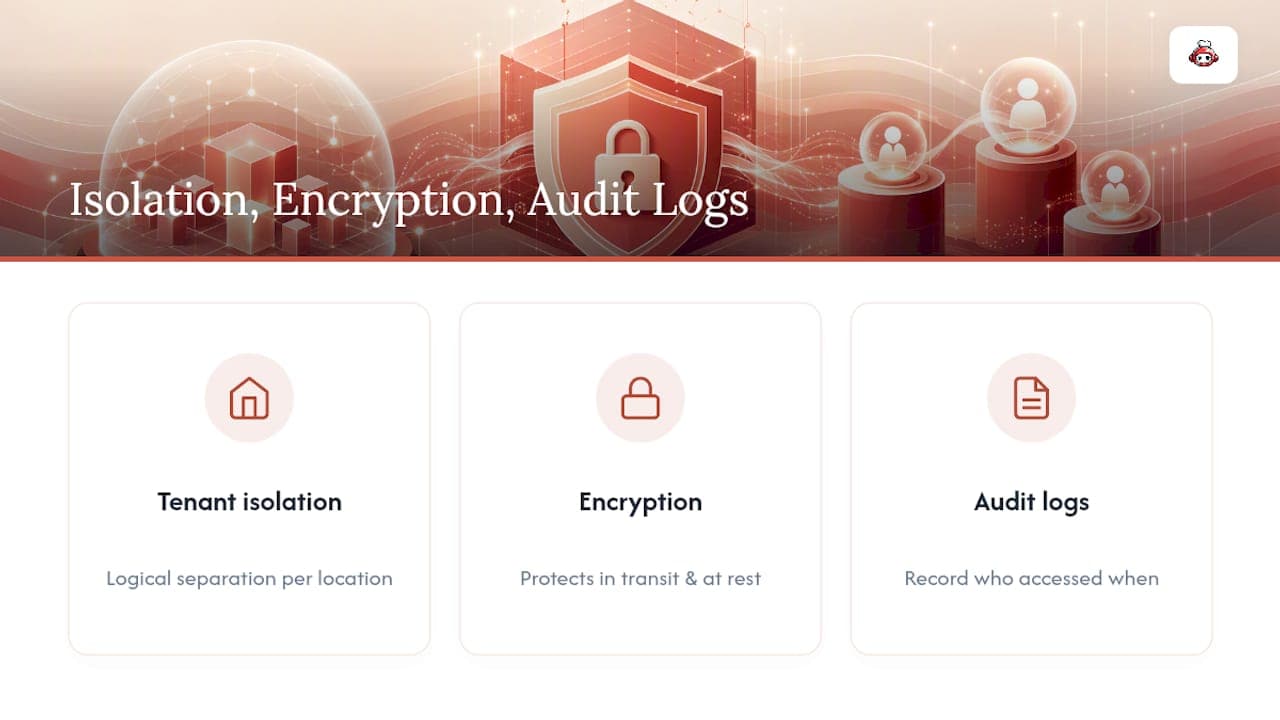
Audit logs matter here too. If you can't see who accessed a customer record and when, you can't investigate a breach properly, and you can't prove to a regulator that you took reasonable care. Push for audit logging as a standard feature, not an enterprise upsell.
Data Monetization and Third-Party Sharing: What Ownership Blocks
Clear ownership terms exist partly to stop your customer data from becoming someone else's product without your knowledge. Vague contract language around "service improvement" or "aggregated insights" often hides the door through which a vendor monetizes data you assumed was yours alone.
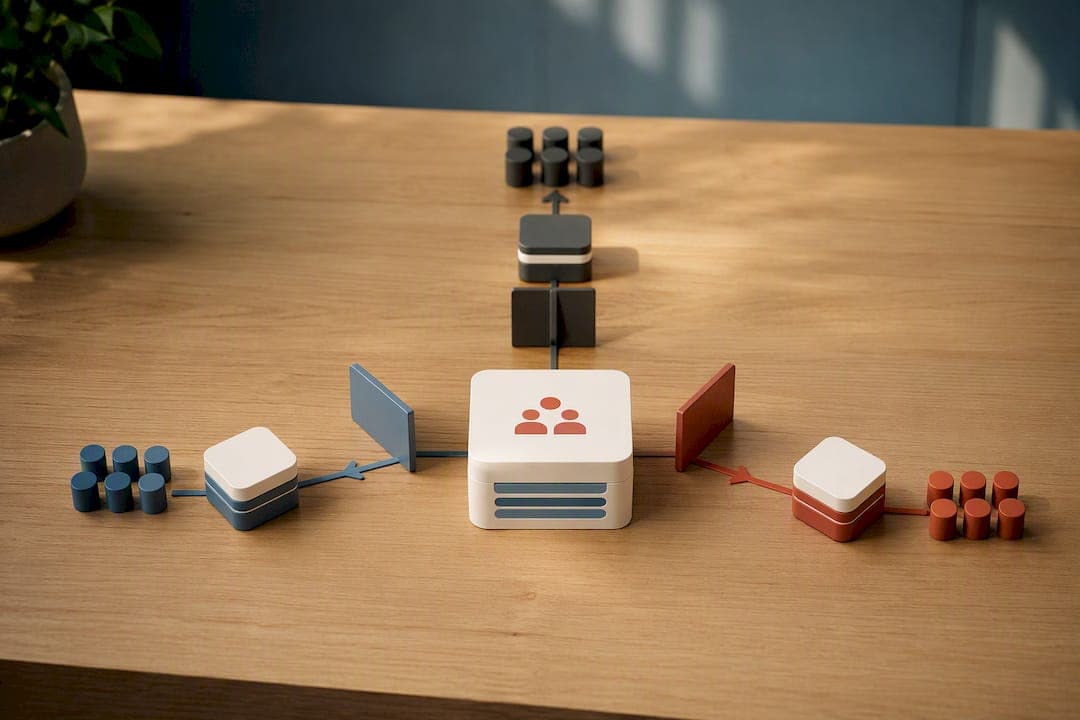
The practical risk shows up two ways. First, a vendor might sell or share aggregated customer behavior with third parties, technically anonymized but still built from your business's specific customer relationships. Second, a vendor might use your data to train models that benefit competitors using the same platform, quietly transferring value your business generated into a shared pool everyone else can draw from.
Neither of these requires malice. Most vendors monetizing data this way believe they're improving the product for everyone. But that belief doesn't change the fact that your customer's information, and the competitive edge it represents, is leaving your control without a clear opt-in.
The fix is contractual specificity. Your DPA and terms of service should state explicitly whether customer data can be used for anything beyond delivering the service you're paying for, and if so, exactly what and under what consent terms. Silence in a contract almost always favors the vendor, not you.
Talking to Customers About How Their Data Is Handled
Ownership isn't just an internal governance question. Customers increasingly want to know what happens to their information, and businesses that communicate clearly about it tend to see less friction when a data request eventually comes in.
Keep privacy policies written in plain language rather than dense legal boilerplate customers skim past. State simply what data you collect, why, and who might process it on your behalf. When a customer submits a request, whether that's asking to see their data or asking you to delete it, confirm receipt quickly and give them a realistic timeline, even if your legal deadline is longer.
Transparency about vendor relationships helps too. If a loyalty program runs through a third-party platform, or delivery coordination flows through an outside courier service, customers generally appreciate knowing that upfront rather than discovering it buried in a privacy policy addendum. This kind of clarity builds the trust IAPP's research ties to customer retention, and it reduces the number of confused or frustrated requests your team has to untangle later.
Ownership as a Competitive Advantage, Not Just a Compliance Task
Most businesses treat data ownership as a defensive obligation, something to handle so legal doesn't get a call from a regulator. That framing undersells what's actually at stake. A business that genuinely controls its customer data can move faster: switch vendors without a migration crisis, launch new analytics without waiting on a platform's roadmap, and respond to a customer request in hours instead of weeks.
The businesses getting this wrong aren't usually breaking the law. They're leaving value on the table by never testing whether their "ownership" claims hold up outside a sales contract. An export test costs an afternoon. Finding out your data is functionally locked in during a vendor dispute costs months.
Treat data ownership terms as a scored line item in every vendor evaluation, right alongside price and feature set. If a platform can't produce a clean export on request, that tells you something no demo will.
*— ADMIN*
Keep Ownership of Your Restaurant's Data With RESTOBOT
Most restaurant platforms treat your customer list as leverage to keep you locked in. RESTOBOT works the other way: no commission on orders, a subscription model instead of a cut of your revenue, and a website live within a day of approval so you can test exports before you're deep into a contract. The Tips feature goes further, giving individual staff members direct ownership of their own tip history and payouts, independent of whether their restaurant even uses the platform.
Before committing to any vendor, including this one, request the DPA and pull a sample customer export during your trial. If you want to see how RESTOBOT's setup handles that test, start by exploring the platform and asking for both during onboarding.
Primary Sources for Data Ownership Rules
- GDPR full legal text — the authoritative source for controller and processor obligations, data subject rights, and response timelines.
- European Commission guidance for individuals — plain-language summary of GDPR rights and what businesses must provide.
- California Attorney General's CCPA resources — official guidance on CCPA and CPRA consumer rights and business duties.
- DataGrail's controller vs. processor breakdown — a clear explainer on how the two roles differ in practice.
Sources
- The difference between data controllers and data processors — DataGrail
- Information for individuals — European Commission
- California Consumer Privacy Act (CCPA) | State of California - Department of Justice - Office of the Attorney General
- What is SaaS customer data ownership? Privacy Terms — PayPro Global
- General Data Protection Regulation (GDPR) – Legal Text
FAQ
What Does Data Ownership Mean?
In practice, it means your business acts as the data controller, holding the legal authority and responsibility to access, correct, export, or delete customer records, while any SaaS vendor acts as a processor bound to your instructions.
What Are the Four Types of Customer Data?
Businesses typically distinguish personal identification data (names, contact details), behavioral data (purchase and browsing history), attitudinal data (preferences, feedback, reviews), and transactional data (order and payment records), each carrying different handling requirements under laws like GDPR and CCPA.
Is Selling Customer Data Legal?
It can be, depending on jurisdiction and disclosure. Under CCPA/CPRA, businesses can sell or share personal information but must disclose it and give consumers the right to opt out; GDPR requires a lawful basis and clear consent for most such uses.
What Determines Data Ownership?
Ownership is determined by contractual role (controller versus processor), the terms in your data processing agreement, and which party actually holds the technical ability to access, export, and delete the data, not by who originally collected it.
Does RESTOBOT Give Restaurants Control Over Their Customer Data?
RESTOBOT's zero-commission model and instant website setup are designed so restaurant operators keep direct control of order and revenue data from day one, and the standalone Tips feature gives individual staff ownership of their own tip records.