

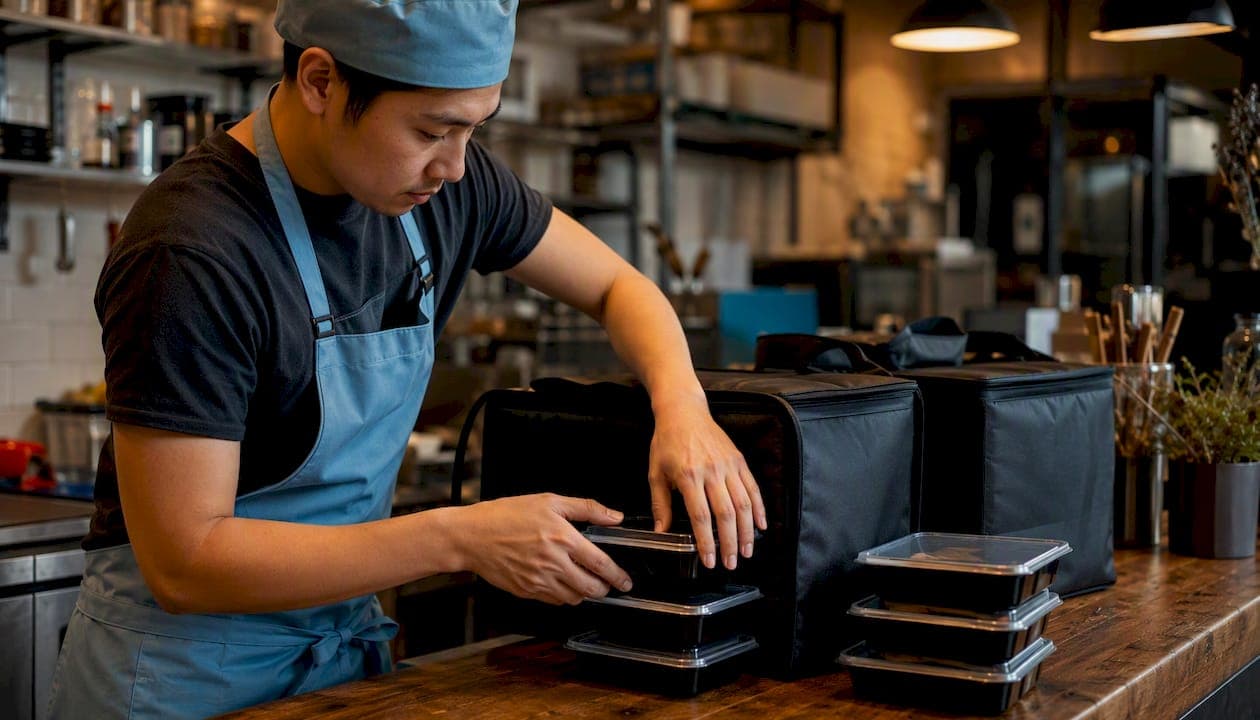
The best delivery management software for restaurants isn't a standalone logistics tool bolted onto your ordering system. It's an all-in-one restaurant platform, like RESTOBOT, that connects your menu, POS, and courier network so an order never sits in limbo between "paid" and "in the kitchen." Restaurants that patch together separate apps for ordering, dispatch, and tracking tend to lose time exactly where it hurts most: the handoff points.
Here's what that integrated approach gets you on day one:
- Fewer failed or late deliveries, because the order hits your dashboard the instant it's placed instead of sitting in a queue.
- One system for menus, POS sync, and delivery status instead of three logins and constant copy-paste.
- Built-in proof of delivery and automatic customer notifications, so your staff isn't fielding "where's my food" calls all night.
This recommendation is for independent restaurants, small chains, and cloud kitchens that want delivery working inside their existing operation, not running parallel to it. Most restaurant-focused platforms, including RESTOBOT, can get a location live within a day once menu data and payment details are ready.
Key Takeaways
Restaurants get the most reliable delivery outcomes from an integrated platform that connects ordering, POS, and courier coordination in one system rather than stitching together separate tools.
| Point | Details |
|---|---|
| Choose restaurant-first over generic | Integrated ordering and POS reduce order injection latency compared to manual, multi-app workflows. |
| Demo with real conditions | Test live POS push, a simulated late order, and offline driver mode before signing anything. |
| Watch pricing structure | Per-stop and per-driver fees can outpace flat subscription costs as delivery volume grows. |
| Track KPIs from day one | Monitor first-time delivery success rate, cost per drop, and manual coordination hours through the first 90 days. |
| RESTOBOT fits restaurant-scale delivery | Zero-commission, POS-integrated platform built for restaurants, deployable within a day with built-in ePOD and tracking. |
Table of Contents
- Why a Restaurant-First Delivery Management Approach Works
- What Should You Test Before Choosing Delivery Software?
- RESTOBOT's Delivery Features and How Restaurants Actually Use Them
- Integrations, APIs, and Technical Considerations
- What to Expect When Rolling Out Delivery Software
- Restaurant Platform or General Logistics Tool: Which Fits?
- What Restaurant Operators Consistently Get Wrong
- Getting Started With RESTOBOT for Delivery Management
- Where Else to Research Delivery Software Options
- Frequently Asked Questions
- Sources
Why a Restaurant-First Delivery Management Approach Works
General-purpose delivery management software is built for fleets: parcel carriers, retail distribution, field service. It optimizes for stops per route and driver utilization across hundreds of addresses. A restaurant has a different problem. You need the order to move from "customer clicked checkout" to "kitchen ticket printed" in seconds, then from "food is ready" to "courier has it" without a human re-typing anything.
That gap between systems has a name in the logistics world: order injection latency. It's the delay between a customer paying and the order actually appearing where kitchen staff can act on it. Manual workflows, someone checking a tablet, retyping an order into a POS, add minutes that compound during a dinner rush. Direct API integrations that push orders straight from checkout into the kitchen queue cut that lag dramatically, which is why restaurant-first platforms build the ordering and delivery layers together instead of as separate add-ons.
The features that matter most for restaurants specifically include live tracking with customer-facing ETAs, electronic proof of delivery (ePOD), a driver app for in-house couriers, and a clean handoff process when you use third-party couriers like Wolt Drive for overflow or off-hours coverage. A branded tracking page, one that looks like your restaurant rather than a generic carrier, also keeps the customer relationship yours instead of a courier network's.
If you're evaluating a platform, ask for a live demo that connects to a real POS, processes a test payment, and routes that order through delivery in real time. Anything else is a slide deck, not a demonstration.
What Should You Test Before Choosing Delivery Software?
Most vendor demos are choreographed to look good. Your job is to break the choreography and see what happens when things go wrong, because that's when a restaurant actually needs the software to work.
- Push a live order from your POS and time how long it takes to appear in the delivery dashboard.
- Simulate a late order and check whether the system automatically updates the customer-facing ETA or requires manual intervention.
- Capture an ePOD with a photo and signature, then confirm it's stored and searchable later, not just displayed once and gone.
- Export a daily proof-of-delivery report to see if it's usable for dispute resolution or just a raw data dump.
- Test the driver app offline by toggling airplane mode mid-delivery to see if the app queues updates or simply breaks.
Beyond the hands-on tasks, bring a short list of questions for the vendor rep:
- What's the uptime guarantee, and is it in writing as part of an SLA?
- Which courier networks does the platform integrate with directly, versus requiring manual re-entry?
- Does the driver app work offline, and what happens to order status when connectivity returns?
- What's the realistic onboarding timeline from signed contract to first live order?
Watch for a few red flags during any trial. A closed API that blocks you from connecting your own POS is a long-term liability, not a minor inconvenience. No POS integrations at all means you're signing up for manual double-entry indefinitely. And hidden per-stop or per-delivery fees buried in the contract can turn an attractive base price into something much less appealing once volume grows. Capterra's rundown of free delivery management software options is a reasonable place to sanity-check pricing expectations before you sit down with a sales rep.
Pro Tip: *Ask the vendor to run the demo on your actual menu data, not a sample restaurant they've rehearsed a hundred times. Real menu complexity, modifiers, combo items, allergen notes expose gaps that a clean demo script never will.*
RESTOBOT's Delivery Features and How Restaurants Actually Use Them
A feature list only means something once you see it applied to a real service model. Restaurants generally fall into one of three delivery patterns, and RESTOBOT's toolset flexes across all three.
A small neighborhood restaurant running its own drivers needs dispatch and a driver app more than anything else, so staff can assign orders and drivers can navigate without leaving the platform. A cloud kitchen with no dining room and full reliance on contracted couriers cares most about clean courier handoff and accurate ETAs, since the kitchen's entire customer experience lives inside that tracking window. A hybrid operation, in-house delivery during peak hours and third-party couriers like Wolt Drive for overflow, needs both, plus a dispatch layer smart enough to route each order to the right channel automatically.
Here's how the core delivery capabilities map to what each of those operations actually needs:
| Feature | What It Does | Who Benefits Most |
|---|---|---|
| Dispatch & driver app | Assigns orders to in-house drivers with turn-by-turn navigation | Small restaurants with their own fleet |
| Route & ETA calculation | Estimates arrival windows and adjusts for traffic or delays | Hybrid operations juggling multiple drivers |
| Electronic proof of delivery | Captures photo, signature, or code confirmation at drop-off | All models, especially high-ticket or catering orders |
| Branded customer tracking page | Shows real-time status under the restaurant's own name | Cloud kitchens building repeat-customer loyalty |
| Courier handoff integration | Routes overflow orders to third-party couriers automatically | Hybrid and high-volume operations |
| Order and delivery analytics | Tracks fulfillment times, failure rates, and driver performance | Multi-location owners managing remotely |
On the integration side, orders captured through RESTOBOT's omnichannel ordering system flow directly into POS platforms and payment processors without a manual re-entry step, and that same data feeds the CRM and analytics dashboard so a completed delivery isn't just closed, it's logged against customer history and repeat-order patterns. A restaurant running reservations through the same platform gets one more benefit: delivery, dine-in, and table bookings show up in a single operational view instead of three disconnected systems.
Integrations, APIs, and Technical Considerations
Delivery software lives or dies on how well it talks to the systems already running your restaurant. Three integration categories matter more than the rest.

POS connectivity comes first. RESTOBOT integrates directly with systems like Dotykacka and Syrve, which means an order placed online or through the Telegram ordering bot lands in the same kitchen display or ticket printer your staff already uses, no separate tablet, no manual transcription. Payment gateway integration matters just as much, since delivery orders typically involve online prepayment, and a platform that supports multiple payment methods, including cryptocurrency, gives customers more ways to pay without adding friction at checkout. Third-party courier connectors round out the list, letting a restaurant tap networks like Wolt Drive for overflow capacity without running a second dispatch system in parallel.
On the technical side, look for an open REST API or webhook support if your restaurant has any custom tooling or plans to build one later. Direct order injection, the order landing in your kitchen system the instant it's placed, beats a polling-based sync that checks for new orders every few minutes. That difference sounds small until you're mid-rush and every minute of lag turns into a customer service problem.
A few security basics are worth confirming regardless of vendor:
- Payment data should be encrypted in transit and at rest, not just "secured" in vague marketing language.
- Ask how long customer and order data is retained, and whether you can export or delete it on request.
- Access controls should let you limit which staff can view payment details versus just order status.
Data privacy rules vary by country and region, so confirm your vendor's compliance posture against your local regulations rather than assuming a US-based or EU-based standard applies everywhere.
What to Expect When Rolling Out Delivery Software
Deployment timelines get exaggerated in both directions, vendors promise same-day miracles, and skeptical owners assume months of setup. The realistic middle ground looks like this:
- Trial period (days 1 to 7): Connect a test menu, process a handful of sample orders, and confirm POS sync works before committing.
- Onboarding and POS integration (days 3 to 10, often overlapping with trial): Sync your actual menu, pricing, and modifiers, and connect your existing POS hardware.
- First live day: Run delivery orders for real, ideally starting with a slower shift rather than a Friday night rush.
- 30-day check: Review first-time delivery success rate and how many orders needed manual intervention.
- 60 to 90-day check: Compare cost per delivery drop and hours your staff spent on manual dispatch or troubleshooting against your pre-software baseline.
Pricing models across the category vary. Some vendors, like Track-POD, charge per stop or per driver, which can get expensive fast for a busy restaurant running dozens of deliveries a night. Others use tiered subscription pricing based on location count or feature set. RESTOBOT's subscription plans run on a flat tiered model with zero commission on orders, so growing delivery volume doesn't quietly inflate your monthly bill the way some other pricing models can.
Whatever model you choose, watch for hidden fees on payment processing, SMS notifications, or "premium support" that should reasonably be included in a base plan. During your trial, track three numbers specifically: first-time delivery success rate, cost per drop, and hours your manager or staff spend manually coordinating delivery instead of running the floor.
Restaurant Platform or General Logistics Tool: Which Fits?
Not every restaurant needs the same kind of software, and pretending otherwise wastes money in both directions. A single-location café doing thirty deliveries a night doesn't need enterprise route optimization built for a 200-vehicle fleet. A ten-location chain running its own delivery fleet across a metro area might genuinely need that depth.
| Business Type | Order Volume | Best-Fit Platform Type | Key Priority |
|---|---|---|---|
| Independent restaurant or café | Low to moderate, single location | Restaurant-first all-in-one platform | Fast setup, POS integration, ePOD |
| Cloud kitchen | Moderate to high, courier-dependent | Restaurant-first platform with strong courier handoff | Branded tracking, courier network access |
| Multi-location chain | High, possibly multi-depot | Restaurant platform with multi-location dashboard, or hybrid with enterprise routing | Centralized reporting, consistent branding across locations |
| Marketplace or courier network operator | Very high, multi-node | Enterprise logistics platform | Deep route optimization, driver fleet management at scale |
Tools like Spoke (formerly Circuit) lean heavily into route optimization and driver experience, which makes sense for operations managing large driver fleets across many stops. That's a different job than what most restaurants need solved. Enterprise platforms built around machine-learning dispatch and predictive ETAs can produce real cost reductions at scale, but that scale usually means hundreds of daily stops across multiple depots, not a restaurant managing its own delivery radius.
The trade-off comes down to speed versus depth. A restaurant-first platform gets you live in a day with ordering, POS, and delivery already connected. An enterprise logistics tool gets you deeper optimization once you're operating at a scale where every percentage point of route efficiency translates into real savings. Most restaurants, even busy ones, never reach the order volume where that trade-off tips in favor of the enterprise option. If you're currently leaning on marketplace apps and losing margin to commissions, it's worth reading how restaurants have moved away from Wolt and Bolt commission structures toward owning their delivery relationship directly.
What Restaurant Operators Consistently Get Wrong
The biggest mistake I see restaurant owners make when shopping for delivery software is evaluating it the way they'd evaluate a POS system: feature checklist, price comparison, done. Delivery software fails or succeeds on the seams between systems, not the features themselves. A platform can have a beautiful driver app and still cost you customers if the order takes ninety seconds to appear in the kitchen after checkout.
Run three tests yourself before signing anything. First, the end-to-end order flow: place a real order as a customer would, and time every step from checkout to kitchen ticket to driver assignment. Second, failure recovery: cancel a driver mid-delivery or force a payment error and watch whether the system degrades gracefully or just breaks. Third, the driver experience: have someone unfamiliar with the software attempt a delivery using only the driver app, no walkthrough, no cheat sheet. If they're confused, your actual delivery staff will be too.
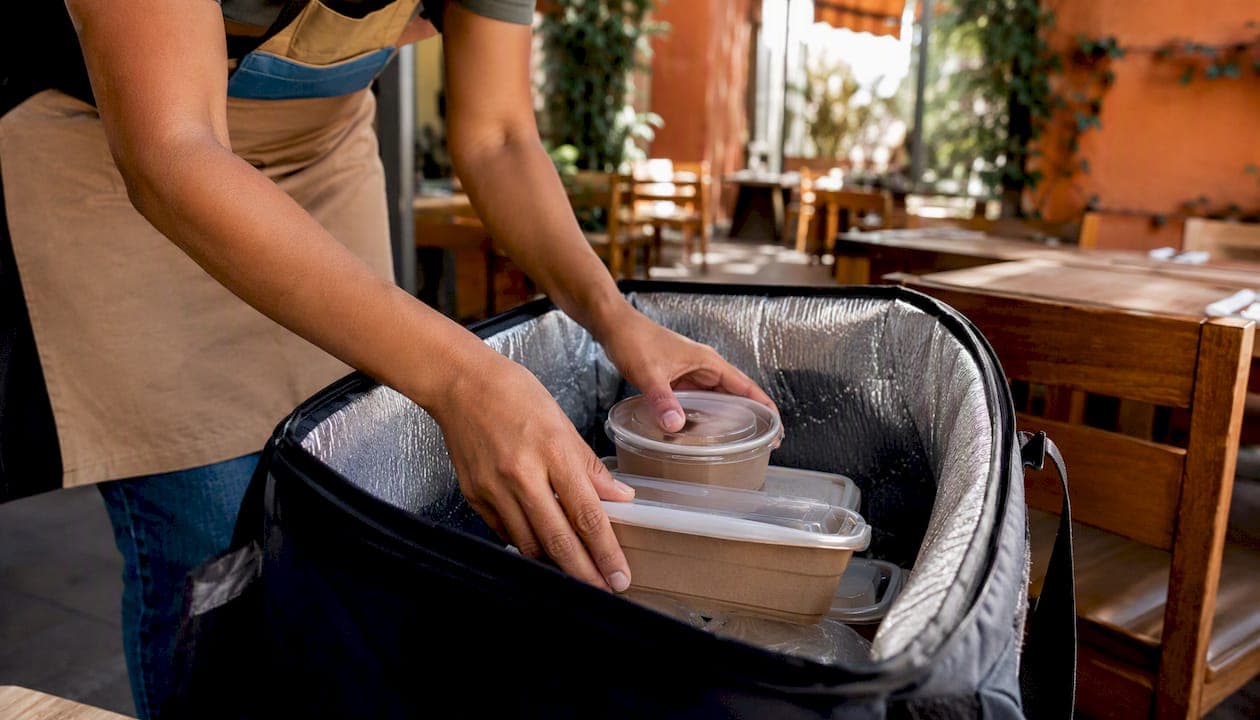
Support quality matters more after onboarding than during the sales process, when everyone is responsive by default. Ask what happens when something breaks at 8 PM on a Saturday, not what the onboarding call looks like. A vendor that treats restaurants as a specialty, rather than an afterthought to a broader logistics product, tends to understand that urgency instinctively.
Getting Started With RESTOBOT for Delivery Management
RESTOBOT brings ordering, POS sync, and delivery coordination into one system, so you're not stitching together three vendors and hoping the handoffs hold up during a rush. Restaurants using POS systems like Dotykacka or Syrve connect directly, which means orders placed through your website or the Telegram ordering bot land in the kitchen queue without anyone retyping them.
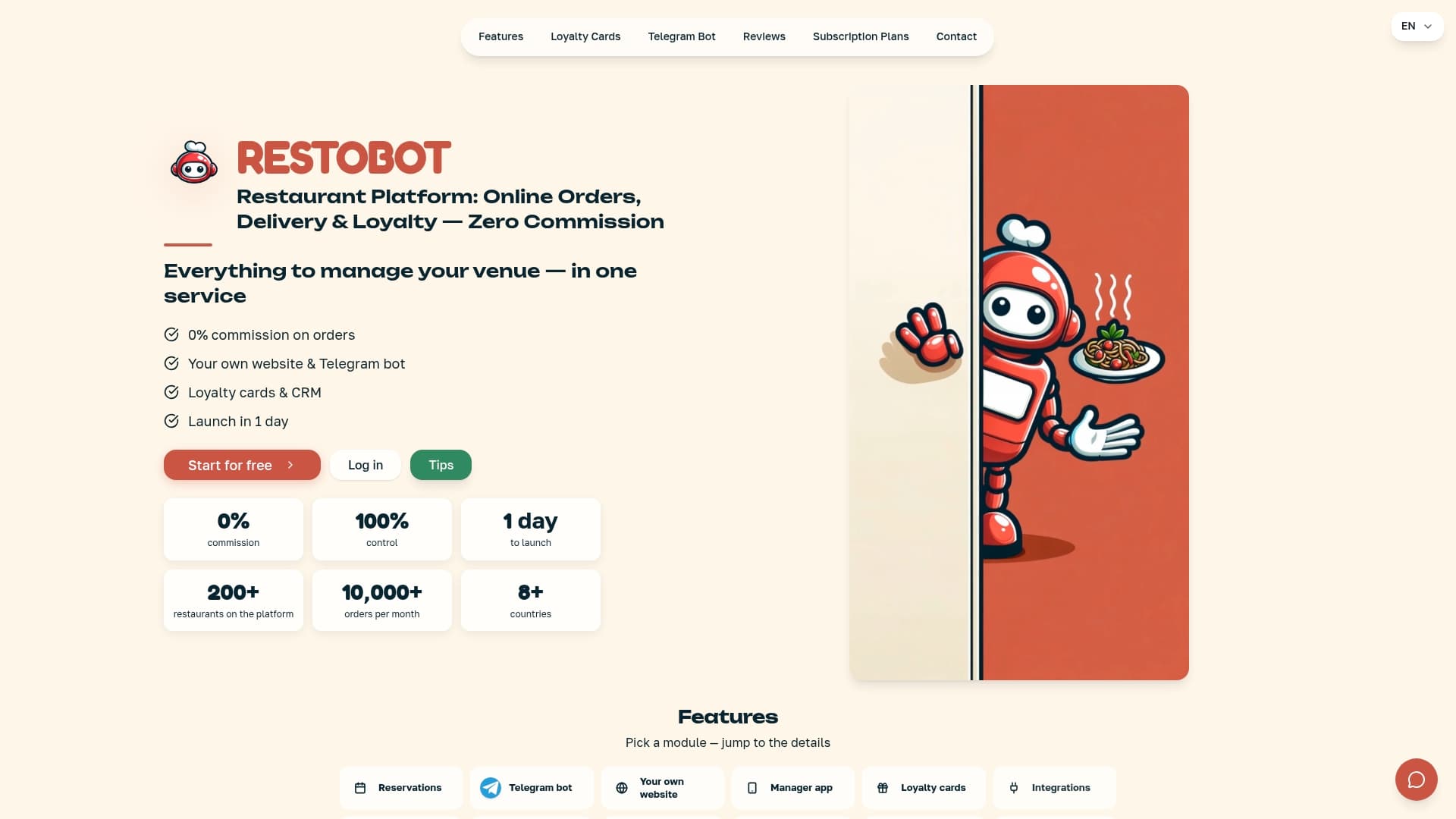
Before a demo, pull together a handful of real sample orders, your current menu structure with modifiers, and access to your POS so the trial reflects your actual operation rather than a generic test account. Have your key numbers ready too, current delivery failure rate, average time from order to kitchen, and what you're paying in commissions today, so you have a real baseline to compare against. RESTOBOT deploys most restaurants within a day and charges zero commission on orders, which means the revenue from every delivery stays with you rather than a third-party marketplace. If that sounds like the fit you've been evaluating for, book a demo and bring your own menu data to the call.
Where Else to Research Delivery Software Options
A handful of neutral resources are worth bookmarking before you commit to any vendor. Capterra's food delivery software shortlist groups vendors by vertical, which helps you skip platforms built for parcel carriers or retail distribution that have little to do with restaurant workflows. Their Onfleet product page is a useful reference for what buyers should expect on predictive ETAs and live tracking, features that have become table stakes rather than differentiators. The Shipday listing shows what a lower-cost, restaurant-tailored option can look like if your volume is still small. And Onro's profile is a decent example of how to read a vendor page critically, separating marketed capabilities from what's actually been tested by real users.
For gauging real-world reliability, G2's review aggregation for platforms like Onfleet gives a sense of what users complain about after the sales call ends, usually support responsiveness or edge-case reliability, not the features listed on the homepage. Treat glowing reviews with the same skepticism as vendor marketing, and weight recent reviews more heavily than old ones, since platforms change quickly. Use these pages to build a shortlist, then verify every claim yourself in a live demo before signing a contract.
Frequently Asked Questions
What is delivery management software? Delivery management software coordinates and tracks the process of getting orders from a business to a customer, covering dispatch, route planning, driver communication, and proof of delivery. For restaurants, the best versions connect directly to ordering and POS systems so delivery isn't a separate workflow bolted onto the kitchen.
What's the difference between restaurant delivery management and general logistics software? Restaurant delivery management ties ordering, kitchen operations, and delivery into one connected flow built around speed and customer experience. General logistics software optimizes routes and driver fleets at scale, which matters more for parcel carriers and multi-depot operations than for a restaurant coordinating same-hour food delivery.
Do I need third-party courier integration if I have my own delivery drivers? Not always, but most restaurants benefit from having both options available. In-house drivers handle predictable volume, while a courier connector like Wolt Drive covers overflow during rushes or staffing gaps without turning away orders.
How long does it take to set up delivery management software for a restaurant? Most restaurant-focused platforms, RESTOBOT included, can get a single location live within a day once your menu and POS access are ready. Multi-location rollouts or complex POS migrations typically take longer, closer to one to two weeks per additional location.
What should I ask a vendor before signing a contract? Ask about uptime guarantees and whether they're backed by a written SLA, which courier networks integrate directly versus requiring manual entry, how the driver app behaves offline, and whether pricing includes hidden per-stop or notification fees. Push for a live demo using your own menu and order data rather than a rehearsed sample account.