

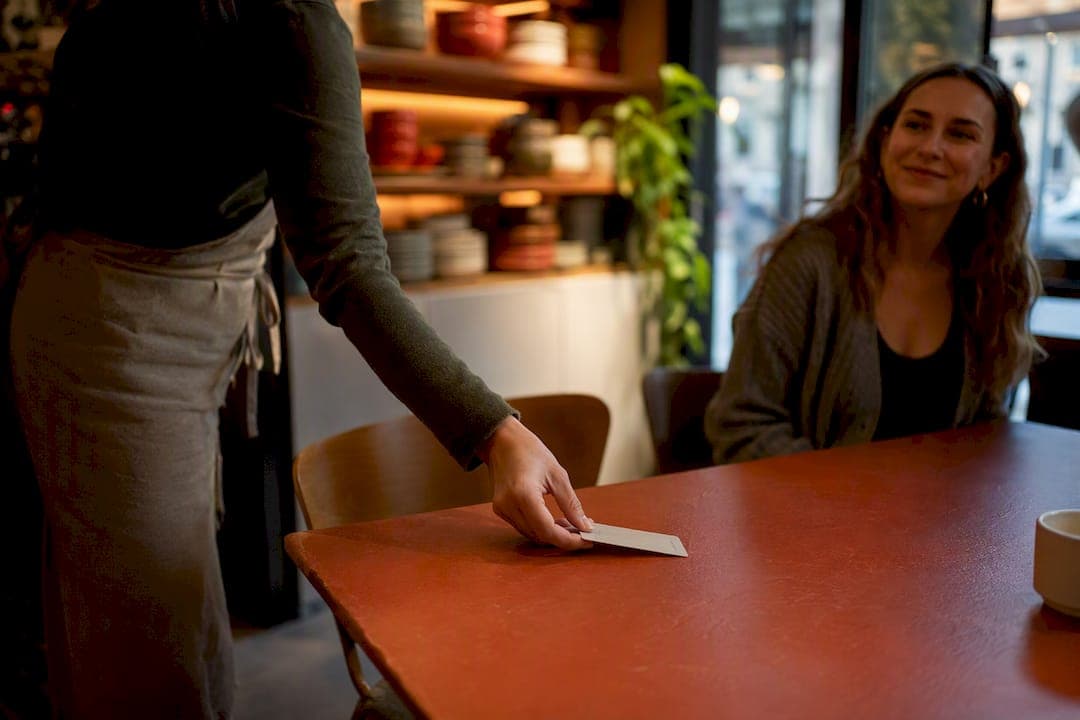
Restaurant customer retention comes down to one decision: stop spending your marketing energy chasing new faces and put it into converting a first-time guest into a second visit within two weeks. That single shift moves more revenue than almost anything else you can do this quarter. Guests who come back average 6.93 visits over their lifetime, while one-timers just... vanish. The math isn't subtle.
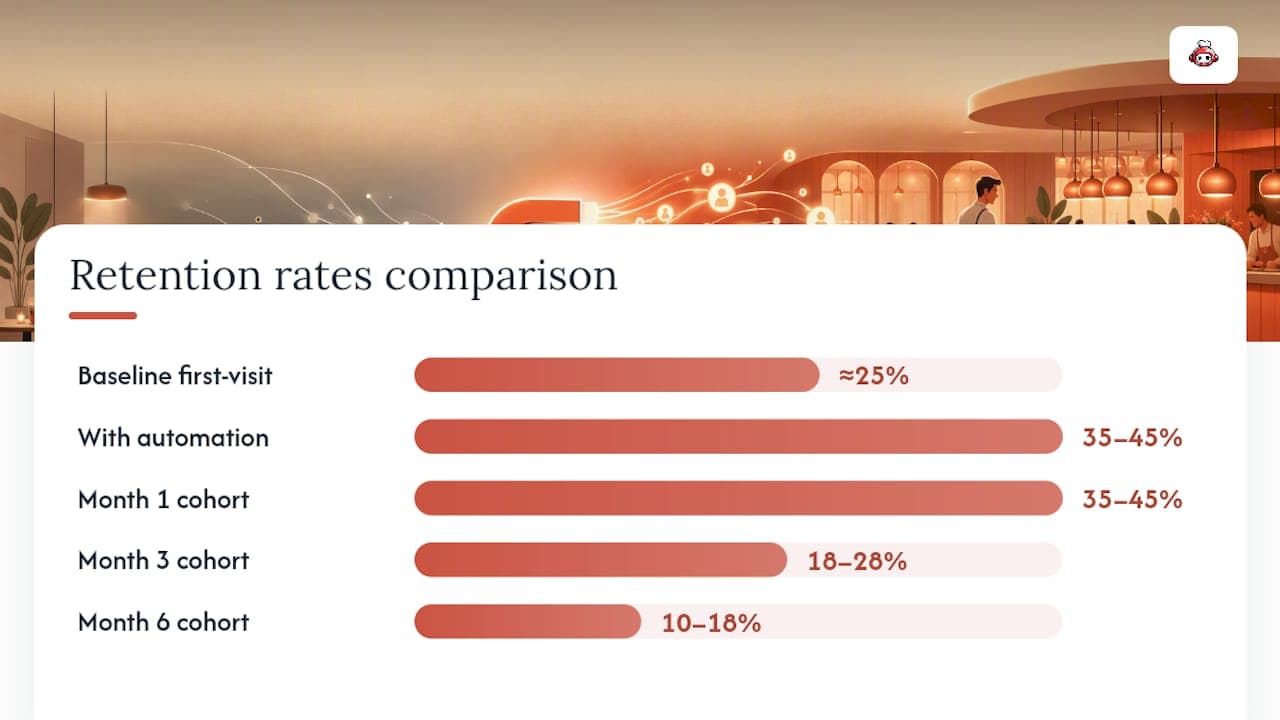
Here's why this works: automated systems that target that early window can push first-visit return rates from the industry average of roughly 25% to 35–45%. That's not a marginal gain. It's the difference between a guest list that leaks and one that compounds.
Do this in the next 48 hours:
- Capture email or phone number at the POS, on your online order form, or at reservation checkout.
- Enroll every new contact into a loyalty signup automatically, not as an afterthought.
- Send a timed follow-up message within 48 hours to 14 days with a small, fast incentive attached.
- Track redemption weekly so you know within days, not months, whether the hook is working.
Key Takeaways
Restaurant customer retention improves fastest when owners focus resources on converting first-time guests into a second visit within 14 days using captured contact data and a fast, low-cost incentive.
| Point | Details |
|---|---|
| Second visit is the lever | Guests who return once average 6.93 lifetime visits versus one-timers who rarely come back at all. |
| Automation lifts return rate | Automated follow-up systems can push first-visit return rates from roughly 25% to 35–45%. |
| Use cohort benchmarks | Healthy retention sits near 35–45% at month 1, 18–28% at month 3, and 10–18% at month 6. |
| Consistency drives repeat visits | Service and food consistency is the top-cited reason guests return, and the top-cited reason they leave. |
| RESTOBOT operationalizes the playbook | Its loyalty cards, CRM, and zero-commission ordering map directly to the second-visit and data-capture tactics above. |
Further reading: Deloitte on modern loyalty programs, Bloom Intelligence retention data, HeyPeko cohort benchmarks, Talon.One loyalty analysis, and Restaurant.org operational guidance.
Table of Contents
- Why Restaurant Customer Retention Matters More Than Acquisition
- A Five-Part Framework for Restaurant Retention Strategies
- A Tactical Playbook for Increasing Repeat Visits
- What to Collect and Which Automations Pay Off First
- Testing What Works Without a Data Team
- Putting This Into an Integrated Platform
- Creating an Ambiance That Brings Guests Back
- Using Social Media to Build Loyalty, Not Just Reach
- Sources
- FAQ
Why Restaurant Customer Retention Matters More Than Acquisition
The numbers here are blunt. Across millions of guest profiles, 77.4% of restaurant customers visit once and never come back. The guests who do return are worth dramatically more over time. Bloom Intelligence's lifetime value comparison shows a significant difference in value between one-time visitors and regular guests. That gap is the entire business case for retention work, condensed into two numbers.
Harvard Business Review's research on customer economics found that even a small bump in retention, on the order of 5%, can lift profits by 25% to 95%. Restaurants run on thin margins, so a lever that powerful deserves more attention than most owners give it. Loyalty and retention infrastructure usually gets treated as a nice-to-have. It shouldn't be.
Cohort benchmarking gives you a way to know if you're actually on track. A healthy food and beverage cohort retains 35–45% of new guests at the one-month mark, 18–28% at three months, and 10–18% at six months. If your numbers sit well below those bands, the problem usually traces back to either weak contact capture or a first-visit experience that didn't land.
Track these five numbers every month, not just when something feels off:
| Metric | What it tells you |
|---|---|
| Retention rate | Percentage of guests who return within a defined window |
| First-visit return rate | Whether your second-visit hook is actually converting |
| Churn rate | How fast you're losing previously active guests |
| Guest visit frequency | Average visits per guest over a rolling period |
| Lifetime value (LTV) | Total revenue a guest generates before they stop coming |
Most restaurants track sales and food cost obsessively but never look at retention rate at all. That's backwards. Sales tell you what happened. Retention rate tells you why.
A Five-Part Framework for Restaurant Retention Strategies
Building durable restaurant retention strategies means running five interlocking processes, not five separate initiatives. Skip one and the others weaken.
- Capture guest data at every touchpoint. POS, online ordering, reservations, and Wi-Fi sign-in are all moments where you can collect a name, email, or phone number.
- Measure the core metrics monthly. Retention rate, first-visit return rate, and churn only mean something when you check them on a schedule.
- Win the second visit deliberately. This is the highest-leverage moment in the entire guest lifecycle, and it needs its own dedicated campaign.
- Protect your regulars. Watch for at-risk signals, like a guest who used to visit weekly and hasn't shown up in a month, and intervene before they're gone.
- Manage your reputation actively. Reviews shape whether new guests convert into repeat guests at all.
The second visit sits at the center of this framework because it's the fork in the road. A guest who returns once is statistically far more likely to become a regular than a guest who never returns at all. Everything else, from loyalty tiers to birthday offers, only matters for guests who've already crossed that threshold once.
Automation handles the repetitive parts well: sending the timed follow-up, flagging a lapsed regular, tracking redemption rates. What automation can't do is train your staff to recover a bad table experience in real time, or decide which VIP guest deserves a comped dessert tonight. Split responsibilities accordingly, and don't let software replace the judgment calls that need a human.
Pro Tip: *Set a recurring 15-minute Monday meeting just to glance at last week's cohort numbers. Catching a dip in week one is far cheaper than discovering it in month three.*
A Tactical Playbook for Increasing Repeat Visits
This is where the framework turns into daily execution. Group your effort by theme and you'll avoid the trap of running twelve disconnected promotions that don't reinforce each other.
Loyalty design. Build a program around fast-gratification rewards rather than distant milestones, as explored in restaurant loyalty programs: who does it best, and what Wendy's is missing. Deloitte's research on loyalty behavior found that programs which feel slow or complicated fail to change guest behavior, while small, immediate wins drive engagement early. A digital loyalty card that lives in Apple Wallet or Google Wallet removes the friction of a paper punch card that gets lost in a junk drawer, and it lets guests redeem across your website, app, or in-person visit without juggling separate systems.
Automated follow-up. Three sequences do most of the work: a welcome message within 48 hours of the first visit, a second-visit incentive that lands between day 7 and day 14, and a birthday or anniversary offer tied to whatever date you captured at signup.
Operational consistency. Consistency in food and service is the single most-cited reason guests return, according to National Restaurant Association research, and inconsistent service is the top reason they leave. A short QA checklist at each station, reviewed daily, catches the small slips before they become the reason a regular stops showing up.
Data capture minimums. At the POS, get name and phone. At reservation booking, get email and party size. At online ordering, get delivery address and order history. At Wi-Fi login or QR tip, get email at minimum. Each touchpoint should ask for the least amount of information necessary to reach the guest again.
Personalization by segment. A one-time visitor needs a reason to come back at all, so lead with a strong first offer. A casual guest who visits every few months responds to frequency-building nudges, like a punch-card style "fifth visit free." A true regular wants recognition more than discounts, a comped appetizer on their anniversary or first access to a new menu item works better than another coupon.
Convenience friction. One-click reorder, a saved payment method, and a streamlined curbside pickup flow remove the small annoyances that quietly push a guest toward a competitor next time.
Channel cadence. Email works well at two to six sends per month. SMS performs best kept tight, one to three per month, since guests unsubscribe fast from anything that feels like spam. Push notifications work as-needed rather than on a fixed schedule. Always include an unsubscribe path and honor opt-outs immediately; SMS compliance rules are strict for a reason.
Community events. A monthly trivia night, a seasonal tasting, or a local collaboration with a nearby business costs little and generates the kind of user-generated social content that a paid ad never will.
What to Collect and Which Automations Pay Off First
You don't need a sprawling data warehouse to run this well. A minimum useful guest profile includes: email, phone number, first-visit date, last-order date, a frequency band (one-time, casual, regular, or super guest), tags for their most-ordered items, and a consent flag for marketing communication.
Segment guests using that frequency band, and build offers around what each segment actually needs:
- One-time visitors need a conversion push, an incentive strong enough to justify a second trip.
- Casual guests respond to frequency incentives that reward the next few visits, not just one.
- Regulars want recognition and small perks more than discounts.
- Super guests deserve early access, exclusive events, or a direct line to give feedback.
Three automations deliver most of the return on this data:
- A 48-hour welcome email with a modest incentive tied to the next order.
- A 7 to 14-day second-visit coupon, targeted specifically at guests who haven't returned yet.
- A lapsed-guest win-back series, triggered automatically once someone who used to visit regularly goes quiet for 30 to 45 days.
Pro Tip: *Don't personalize based on guesswork. If your data shows a guest always orders the same dish, lead your win-back message with that dish, not a generic "we miss you" line. Specificity converts better than sentiment.*
Testing What Works Without a Data Team
You don't need an analytics department to run a useful test. Run each cell against at least 100 guests if your volume allows it, and give it two to three weeks before drawing conclusions.
Cohort data tells you where the leak is. Analyzing shifts across the M1, M3, and M6 windows points you to the actual cause:
- Weak M1 retention usually means poor contact capture. You're not reaching guests at all.
- Solid M1 but weak M3 points to a first-visit experience that didn't earn a repeat.
- Decent M1 and M3 but a drop at M6 often signals your offer cadence has gone stale.
Run a lightweight dashboard with two reporting rhythms: check active campaigns weekly for open and redemption rates, and review full cohort data once a month. That monthly review is where you catch slow drift before it becomes a real problem.
Putting This Into an Integrated Platform
Running five processes with three automations and a testing matrix is a lot to manage across disconnected tools. An all-in-one platform maps directly onto this playbook: instant website and ordering handles data capture at the point of sale, digital loyalty cards in Apple and Google Wallet handle fast-gratification rewards, and a CRM and analytics dashboard handles the monthly cohort review.
A rollout for a single location might look like this:
- Days 1–30: Turn on the website, online ordering, and POS integration so every order captures a guest profile automatically.
- Days 31–60: Launch the digital loyalty card and set up the 48-hour welcome and 7 to 14-day second-visit automations.
- Days 61–90: Add QR-based tipping for staff, review your first cohort report, and adjust offer timing based on what the M1 data shows.
Watch first-visit return rate and loyalty redemption closely in that first 90 days. They move faster than lifetime value and tell you early whether the system is working.
Creating an Ambiance That Brings Guests Back
Ambiance is retention infrastructure, not decor. Lighting, noise level, seating comfort, and even the temperature of a room shape whether a guest associates your restaurant with a good night out or a place they tolerated once. Guests remember how a space made them feel far longer than they remember the exact dish they ordered.
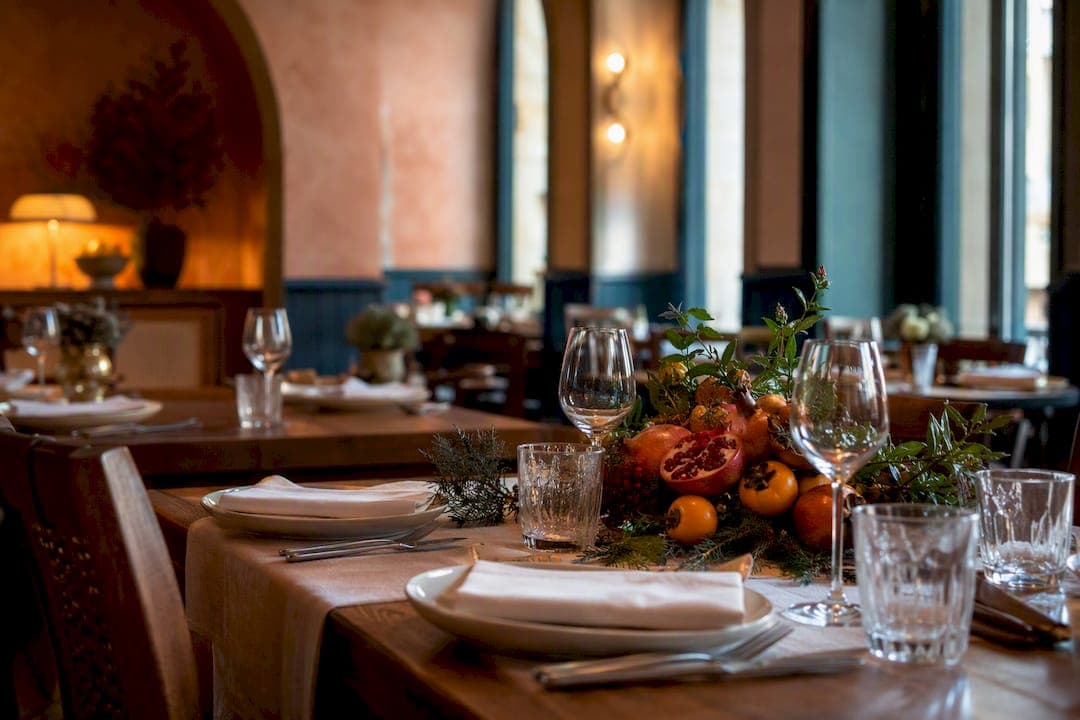
Consistency matters here just as much as it does with food. A dining room that feels warm and lively on a Friday and half-lit and quiet on a Tuesday sends a confusing signal about what your brand actually is. Pick a mood and hold it steady across every shift, whether that's a lively bar energy or a quiet, romantic dinner spot.
Small sensory details do more work than owners expect. A consistent house playlist, a signature scent near the entrance, or a specific plating style that guests start to recognize all build the kind of subconscious familiarity that makes a return visit feel like coming home rather than trying something new. Music volume alone is one of the most common complaints in guest feedback, and it's one of the cheapest things to fix.
Seasonal touches, a refreshed patio setup for summer, warmer lighting and a soup special in winter, give regulars a reason to notice you're paying attention. That noticing is what separates a restaurant guests default to from one they simply visited once.
Using Social Media to Build Loyalty, Not Just Reach
Social media's real retention value isn't the follower count. It's the repeated, low-cost touchpoint that keeps your restaurant top of mind between visits. A guest who follows your Instagram and sees a new seasonal dish three weeks after their last visit is far more likely to come back than one who heard nothing from you at all.
User-generated content does more for loyalty than polished brand photography. When a regular tags your restaurant in their own post, their friends see a genuine recommendation, not an ad. Encourage it directly: a small perk for guests who tag you, or a monthly repost of a favorite guest photo, costs nothing and builds the kind of community feel that mixing loyalty mechanics with social engagement reinforces well.
Respond fast and personally to comments and direct messages. A guest who asks about a menu item or dietary accommodation and gets a quick, specific answer is more likely to book a table than one who gets silence or a canned reply. Treat your social inbox with the same urgency as a ringing phone.
Use stories and short video for the things that don't fit a static post: a behind-the-scenes look at prep, a staff member introducing themselves, a quick clip of a packed Friday night. That kind of content builds the sense that there's a real place with real people behind the menu, which is exactly what turns a casual follower into someone who books a table this weekend.
Author's Perspective: What Separates Average Programs From Exceptional Ones
Most restaurants treat loyalty as a discount mechanism instead of a data system, and that's the core mistake. A punch card bolted onto a POS with no automation behind it will always underperform a program where guest data flows automatically into a follow-up sequence. Systems beat one-off promotions because systems compound.
The real tradeoff is reward generosity against unit economics. Test small before rolling anything out chainwide.
Automation earns its keep once you're managing more contacts than you can personally track in your head, usually a few hundred active guests. Below that, a manager who knows regulars by name will always outperform software.
Getting Started With RESTOBOT's Retention Tools
The platform maps directly onto the tactics in this guide: digital loyalty cards that live in a guest's Apple or Google Wallet, a CRM that captures contact data automatically at every order and reservation, and QR-based tipping that gives staff a direct, commission-free way to collect gratuities. Website and ordering setup happens automatically within minutes of your application being confirmed, so there's no weeks-long build before you can start capturing guest data. If you're ready to put the second-visit framework into practice, start with a free restaurant website with built-in online ordering and layer the loyalty and CRM tools on once your first automated campaigns are live.
Sources
FAQ
What is a reasonable customer retention rate for a restaurant?
A healthy restaurant cohort retains 35–45% of new guests at one month, 18–28% at three months, and 10–18% at six months. Falling well below those numbers usually points to weak contact capture or a disappointing first visit.
How do you save a customer who's had a bad experience?
Acknowledge the problem immediately, offer a specific fix rather than a vague apology, and follow up personally within a day or two. Staff trained in service recovery, paired with a fast, sincere response to negative reviews, keeps most recoverable guests from leaving for good.
What are the three pillars of customer retention?
While frameworks vary, most retention strategies center on consistent service and food quality, systematic guest data capture, and timely, personalized follow-up that targets the crucial second visit.
What is McDonald's customer retention rate?
Specific brand-level retention figures for McDonald's aren't publicly available in a form that permits fair comparison to independent restaurants, since their scale and loyalty app data operate very differently from a single-location business.
How can RESTOBOT help with restaurant retention specifically?
RESTOBOT combines digital loyalty cards, automated CRM campaigns, and zero-commission ordering into one platform, letting owners capture guest data and launch second-visit automations without stitching together separate tools.
Recommended
- Case Study: Skill Kebab — how they increased orders 40% without Bolt | RESTOBOT | RESTOBOT
- RESTOBOT Blog — guides for restaurants | RESTOBOT | RESTOBOT
- Apple Wallet and Google Wallet loyalty cards for restaurants — end of paper stamp cards | RESTOBOT | RESTOBOT
- How to get 100 Google reviews per month for your restaurant — automatically | RESTOBOT | RESTOBOT