

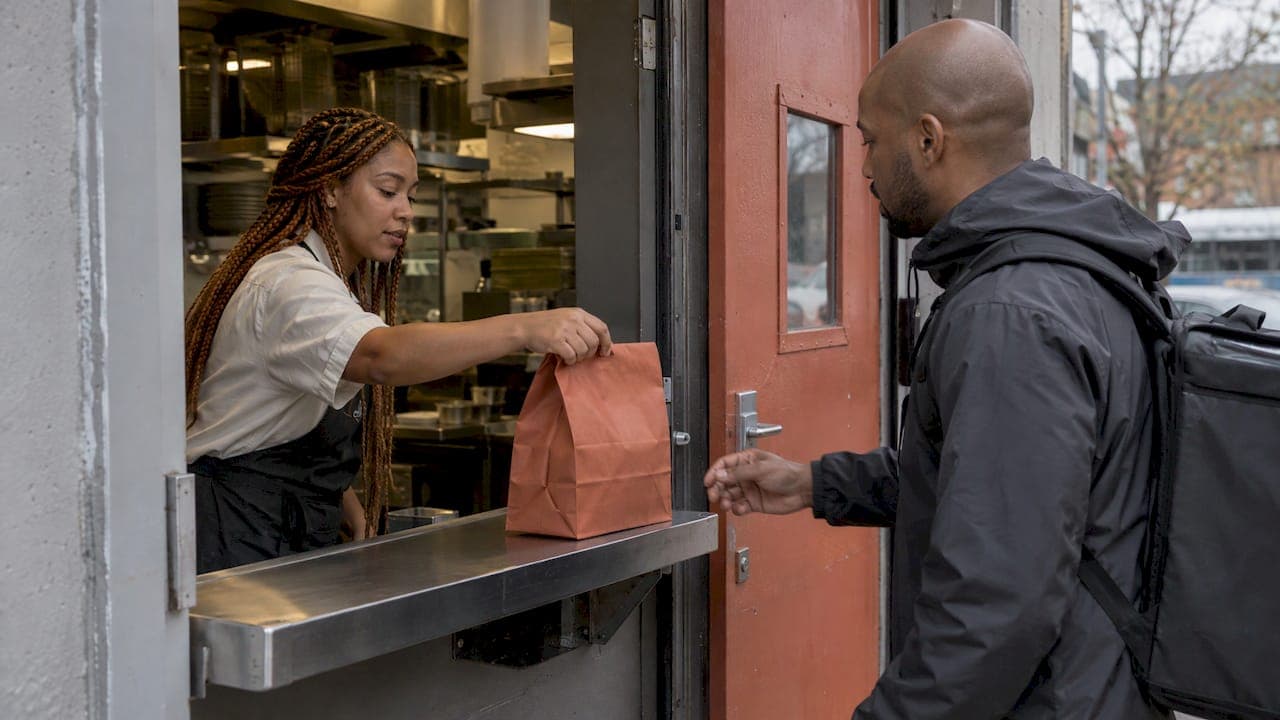
If you run a restaurant or café and you are looking at Onfleet alternatives, the best replacement is probably not another dispatch tool. It is a platform that takes the order, the payment and the courier booking in one place, so you are not stitching three systems together. Onfleet is built for courier fleets and delivery operations. A restaurant's problem is different: it wants direct orders, a delivery option that does not eat the margin, and guests who come back. That is the job RESTOBOT is built for, with online ordering on your own website and Telegram bot, delivery through third-party couriers such as Wolt Drive, and a monthly subscription instead of a cut of every order.
Below, the alternatives are grouped by what they actually do, so you can see which group fits a kitchen rather than a courier depot.
Table of Contents
- What Onfleet does, and the question to ask first
- The four kinds of Onfleet alternative
- Enterprise suites and routing specialists
- Delivery-orchestration platforms
- Courier networks and aggregators
- Marketplaces: the cost most comparisons leave out
- RESTOBOT: the restaurant-side alternative
- How to choose: five checks before you commit
- Our perspective
- Get started with RESTOBOT
- FAQ
- Sources
What Onfleet does, and the question to ask first
Onfleet is a last-mile delivery management platform. In plain terms, it is software that lets a dispatcher assign deliveries to drivers, follow them on a map, optimise routes and collect proof of delivery, such as a photo or signature. Reviewers on comparison sites rate it highly for faster dispatch and route execution once it has been configured, which is why it appears at the top of many shortlists.
The question to ask before you compare alternatives is not "which tool is closest to Onfleet?" It is "who drives my deliveries, and where do my orders come from?"
- If you employ your own drivers and take hundreds of orders a day, a dispatch platform may earn its place.
- If you rely on marketplaces for orders and their couriers for delivery, you do not need dispatch software at all. You need a way to bring those guests to your own channel.
- If you want delivery without running a fleet, you need an ordering platform that books third-party couriers for you.
Most independent restaurants, cafés and small groups sit in the second or third group. That changes which alternatives are worth your time.
The four kinds of Onfleet alternative
A 2026 buyer's guide from Supply Chain Research splits the last-mile market into four tiers: enterprise transportation suites, routing specialists, delivery-orchestration platforms (the tier where it places Onfleet itself) and gig or crowdsourced courier networks. That split is useful because the products in each tier solve different problems.
| Kind of option | Examples | What it does | Typical fit |
|---|---|---|---|
| Enterprise suites | Manhattan, Blue Yonder, Descartes, project44 | Transport and supply-chain planning across large networks | Retail and logistics groups |
| Routing specialists | ORTEC, PTV, WorkWave, OptimoRoute, Samsara | Plan efficient multi-stop routes for your own drivers | Companies with scheduled routes |
| Delivery-orchestration platforms | Bringg, FarEye, Locus, DispatchTrack, Onfleet, Tookan | Dispatch, tracking, proof of delivery, driver apps | Courier firms, large fleets |
| Gig courier networks | Uber Direct, DoorDash Drive, Roadie | On-demand drivers you book per delivery | Venues with no drivers of their own |
| Ordering and delivery platform for restaurants | RESTOBOT | Website, ordering, payments, loyalty, courier booking | Restaurants and cafés |
The last row is the one most restaurant owners are really shopping for, even if they began by searching for Onfleet.
Enterprise suites and routing specialists
The first two tiers are rarely right for a restaurant. Enterprise suites are designed for warehouses, freight and multi-country supply chains. Routing specialists optimise the order of stops for a vehicle that visits many addresses in a day, which suits parcel rounds and field services much more than a pizza that must arrive hot in twenty minutes.
If your kitchen sends out a handful of orders per hour to addresses inside a few kilometres, route optimisation saves you little. What costs you money is the commission on each order and the time staff spend re-keying orders from several tablets.
Delivery-orchestration platforms
This is where Onfleet's closest rivals sit: Tookan, Bringg, DispatchTrack, FarEye and others. They share a pattern. You pay a monthly fee that covers a set number of tasks (one task is one pickup or drop-off), and you pay extra when you go over that number. Features such as route optimisation, branded driver apps or custom forms are often add-ons or sit on higher tiers.
That pricing shape matters more than any single feature. An analysis of Tookan against Onfleet advises buyers to model year-one cost as the base subscription plus expected overages and gated add-ons, and to check monthly task volume, overage rates, integrations and support terms. Do that sum with your own numbers. A restaurant that does 40 deliveries on an ordinary weekday and 120 on a Saturday will land very differently on a task-based plan from a courier firm doing thousands.
These platforms also assume you bring the drivers, and they do not take the order. You would still need a website, an ordering flow, a payment provider and a menu that stays in sync. That is three or four tools before the first parcel leaves the door. If you want to understand how the pieces fit, our guide to delivery management software for restaurants walks through what a restaurant actually needs from it.
Courier networks and aggregators
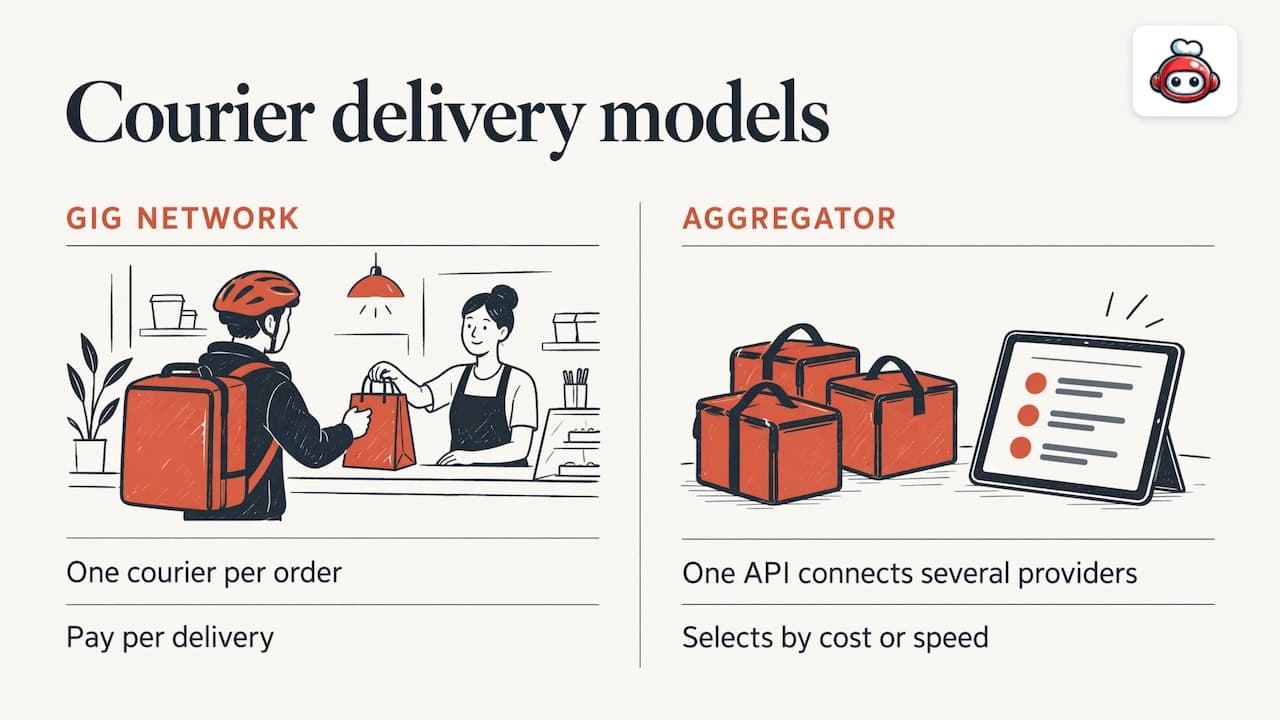
Gig networks such as Uber Direct and DoorDash Drive solve the "I have no drivers" problem. You book a courier for a single order and pay per delivery. Aggregators such as Nash go one step further: a single API connects you to several delivery providers and picks one per order based on cost or speed, according to a 2026 tools profile.
The idea is sound, and it points to the real answer for restaurants. You rarely need to own dispatch software. You need a smooth connection between your own order and a courier who is already there. The detail is in the integration: how an order becomes a courier booking, how status updates flow back to the guest, and what happens when a courier cancels. Our third-party delivery integration guide covers that handoff, and if you are weighing outsourced delivery generally, the 60 to 90 day pilot checklist shows how to test it without committing your whole operation.
For a wider look at how delivery software and fulfilment workflows fit together, a fulfilment guide from warehouse to doorstep gives useful background on the end-to-end flow.
Marketplaces: the cost most comparisons leave out
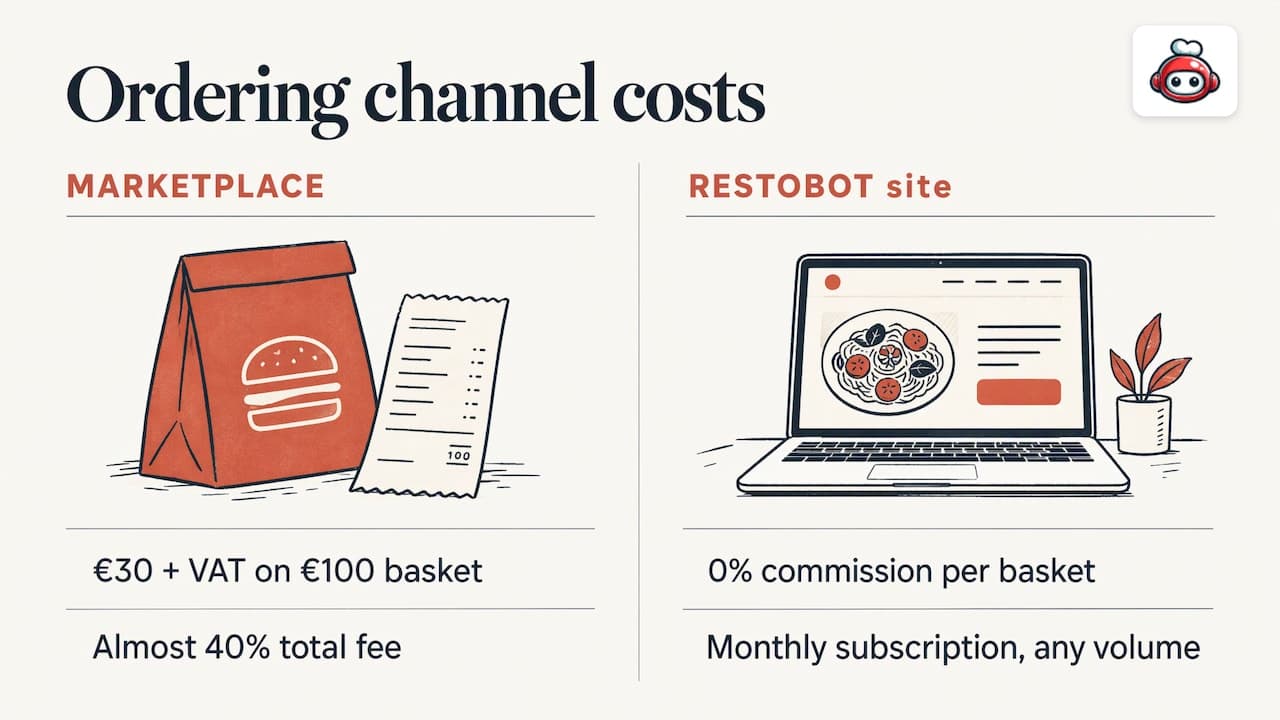
Many restaurants searching for an Onfleet alternative are really trying to escape marketplace fees. Uber Eats, Glovo, Bolt Food, Wolt, Just Eat, Pyszne and similar apps charge 30% of the net order value plus VAT, almost 40% in total. Those apps give you reach, but they also give you the guest relationship, and they take a large share of every order.
A simple example: on a basket of €100 net, a marketplace takes €30 plus VAT on that fee, before food, packaging and staff are paid for. The same basket ordered through your own site on RESTOBOT carries 0% commission. You pay only your monthly subscription, whatever the volume of orders.
This is why dispatch software alone rarely fixes the margin. Dispatch decides how an order is delivered. It says nothing about who owns the order, the guest's contact details or the fee. The direct ordering versus marketplaces guide sets out a 30-day plan for moving the profitable orders to your own channel, and the hybrid delivery model explains how to keep a marketplace for discovery while steering repeat guests to direct ordering.
RESTOBOT: the restaurant-side alternative
RESTOBOT is an all-in-one platform for restaurants and foodservice businesses. Rather than a dispatch tool for drivers, it covers the whole path from the guest's screen to the courier:
- Website builder with an embedded menu and reservations, created instantly and launched in one day.
- Omnichannel ordering through your website and a Telegram bot.
- Delivery management through third-party couriers such as Wolt Drive. The Wolt Drive integration checklist shows how the webhooks work for anyone setting it up.
- Online payments with several methods, including cryptocurrency.
- Digital loyalty cards for Apple Wallet and Google Wallet, plus CRM and customer engagement tools.
- Reservations from the web, Google Maps and Telegram, and automated review boosting for Google and TripAdvisor.
- A management dashboard with real-time order control, analytics and a manager mobile app, plus POS integrations.
The pricing is a subscription, not a percentage. These are the published plans:
| Plan | Monthly | Annual |
|---|---|---|
| LOYALTY | from €39 per month | €29 per year |
| MENU | from €69 per month | €59 per year |
| FULL | from €119 per month | €99 per year |
Current details and what each plan includes are on the RESTOBOT pricing page.
Compare that with a task-based dispatch plan. You are not counting tasks, and you are not paying a share of what your guests spend. The cost is predictable, which makes it easy to put into a margin spreadsheet.
Where it fits best
- A single restaurant or café that wants its own ordering channel and delivery without hiring dispatchers.
- A small group that needs one dashboard across sites. The guide to multi-location restaurant ordering shows how that is set up.
- A venue replacing a patchwork of a website plugin, a separate loyalty app and a marketplace tablet.
If you are switching from another ordering tool, the hour-by-hour migration checklist helps you cut over without losing a service.
How to choose: five checks before you commit
Whichever route you take, run these checks. They are the questions that separate a tool that fits your kitchen from one that merely looks good on a feature list.
- Who drives? If you have no drivers, rule out anything that assumes you do. Look for courier booking built into the ordering flow.
- Who owns the order? Your own website and your own guest list are worth more than a ranking inside someone else's app.
- What is the all-in monthly cost? Add the subscription, any usage charges and any add-ons. Then divide by your real order count. A flat fee with 0% commission is easy to model; a task-based plan needs your busiest week as the test case.
- What connects to what? List your POS, payment provider and any courier you already use. Ask each vendor how orders and statuses flow between them.
- How fast can you go live? A tool you can launch in a day lets you test the idea in the same week. Anything that needs a long implementation project is a bigger bet.
One more cost lever sits outside software: where you deliver. Tight 10 to 30 minute delivery rings keep food hot and courier costs down, whichever platform you use. For the margin side, the on-demand delivery 0 to 90 day plan lays out the order of steps.
Our perspective
We built RESTOBOT because a restaurant's delivery problem is rarely a routing problem. It is an ownership problem: who gets the order, who gets the guest, and who keeps the margin.
When a marketplace takes 30% of the net order value plus VAT, no amount of clever dispatch gives that money back. That is why we charge a monthly subscription and nothing on orders. Your sales stay yours, and you can see the cost before the month begins.
We also think restaurants should not need a project team to go online. A site can be created instantly and launched in one day, with the menu, reservations, ordering, loyalty cards and courier booking in the same place. The people who serve your guests belong in that picture too, which is why every plan includes tips for staff, paid straight to the worker with no commission.
For most restaurants, that is a better answer than a dispatch platform built for courier fleets.
the author
Get started with RESTOBOT
If you want direct ordering, courier booking and loyalty in one subscription, start with the plan that matches your needs: MENU from €69 per month for the online menu and ordering, or FULL from €119 per month for the full feature set. See the options on the pricing page. Staff can also receive online tips with a personal profile, rating and comments, even where their venue is not yet on RESTOBOT.
FAQ
What is a good alternative to Onfleet for a restaurant?
For a restaurant, the closest fit is an ordering and delivery platform rather than a dispatch tool. RESTOBOT gives you a website, online ordering, payments and courier booking through partners such as Wolt Drive, with 0% commission on orders and a monthly subscription from €39.
Do I need delivery dispatch software if I use third-party couriers?
Usually not. Dispatch software is made for managing your own drivers. If couriers are booked per order, what you need is a clean connection between your ordering system and the courier, with status updates passed back to the guest.
Why are marketplaces so expensive compared with direct ordering?
Uber Eats, Glovo, Bolt Food, Wolt, Just Eat and Pyszne charge 30% of the net order value plus VAT, almost 40% in total. On your own channel through RESTOBOT, the commission is 0%, and you pay only the subscription.
How quickly can a restaurant launch with RESTOBOT?
The site can be created instantly and launched in one day. We do not promise any other timeline, so for a multi-site rollout, plan the menu and the courier setup first.
Can waiters and bartenders use RESTOBOT even if their venue does not?
Yes. A worker can register alone and receive tips from guests via a QR code, with no commission taken. The worker has a public profile with a rating and comments, and sets the payout schedule in the payment provider.