

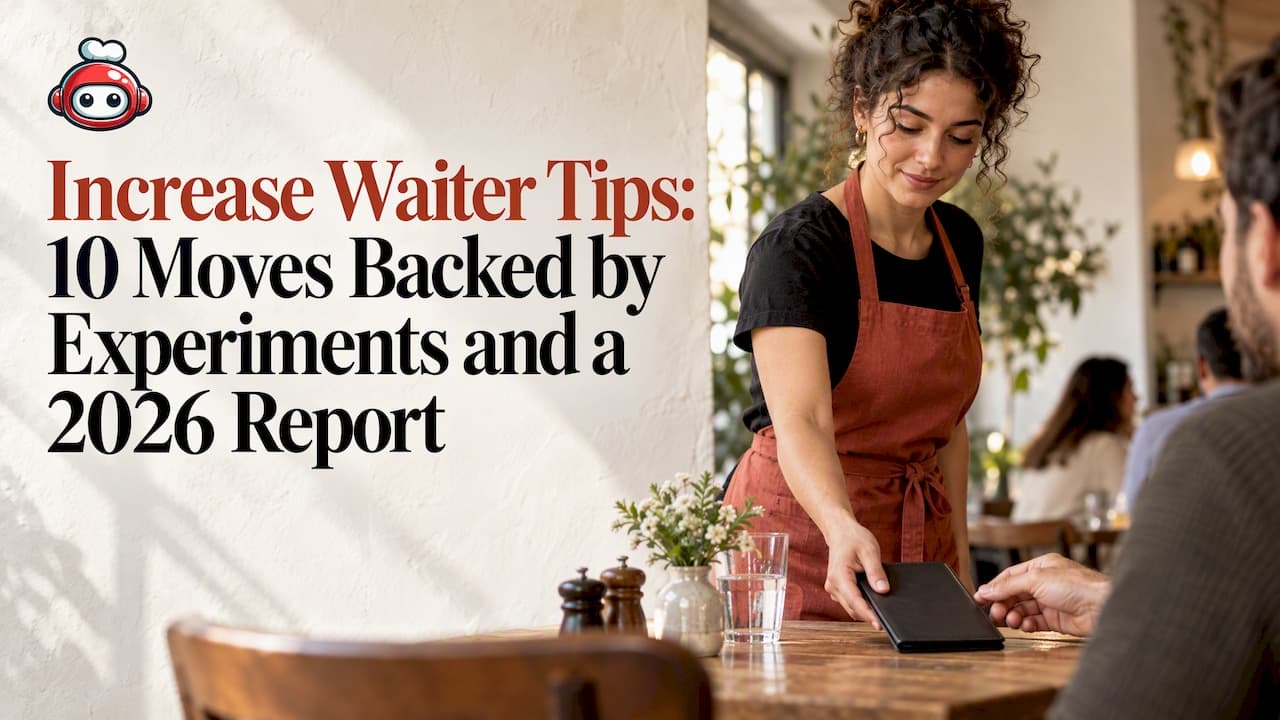
To increase waiter tips, combine four habits: mirror what guests say, time a small gift with the bill, recommend dishes with confidence, and make cashless tipping effortless. Field experiments and a 2026 industry report back each one. The list below gives you scripts, a drill and a shift checklist you can use tonight.
***
TL;DR:
>
- Menu knowledge is the strongest tipping factor for 45% of surveyed guests, so pair a dish feature with a concrete benefit and brief story. - Experiments found up to a 25% tip increase when a drink accompanied the bill; check venue rules and skip gifts after tense or hurried meals. - Preset card options and QR codes reduce payment friction; place a code with strong contrast in the bill folder and mention tipping once, without pressure. - Match your pace and tone to the table, check back within two minutes of food arriving, and bring the bill when guests slow down.
***
Table of Contents
- 1. Ten ways to earn bigger gratuities on shift
- 2. How do digital tipping and QR options change what guests leave?
- 3. When do freebies and timing make small gestures pay off?
- 4. Which words, scripts and drills make rapport feel natural?
- 5. What does the evidence say about tipping?
- 6. How should you tailor service to different guests and cultures?
- 7. How do you handle difficult guests without losing the tip?
- 8. Can loyalty programmes help you earn more tips?
- 9. What do experienced servers say actually works?
- 10. Start collecting commission-free tips with us
- FAQ
- Sources
1. Ten ways to earn bigger gratuities on shift
- Mirror the guest's exact words and repeat the order back. Echoing a guest's specific wording can help build rapport. Guest: "Just a small glass of the Rioja." You: "A small glass of the Rioja, coming up."
- Time a small complimentary item with the bill. Experiments found higher tips when a free drink arrived with the cheque, not earlier. Say: "This one's on us, thanks for spending your evening here."
- Lead with product competence. 45% of surveyed guests cite competence and menu knowledge as the strongest reason to tip. Pair a feature with a benefit and add a short story: "The braised short rib falls off the bone, the chef cooks it for eight hours."
- Use open body language and a sincere smile. Stand square to the table, keep your hands visible, and pause before you speak. Calm posture reads as competence.
- Sell suggestively, not pushily. Offer a choice instead of a yes or no: "Would you like to start with an aperitif, or shall I bring the wine list?"
- Make digital tipping easy. Point guests to the preset options or your QR profile in one neutral sentence, covered in the next section.
- Time check-backs and the bill. Visit within two minutes of food landing, then leave guests alone. Bring the bill when they slow down, not when plates are cleared.
- Add one personal touch. Remember a regular's usual order or a birthday. A handwritten thank-you on the bill works best for tables that clearly enjoyed themselves.
- Look the part. Clean uniform, tidy hair and a confident stance reduce a guest's uncertainty before you say a word.
- Run a four-moment checklist. Greeting: name and water. Ordering: mirror and recommend. Midway: check-back. Bill: gift, thanks and tip prompt.
Pro Tip: *Pick one tactic per shift and track your average tip. Small gains compound faster than a total reinvention.*
2. How do digital tipping and QR options change what guests leave?
Guests tip more readily when the decision takes one tap. Preset options and digital tip profiles increase tip frequency and amount by reducing friction and anchoring the choice, and removing cash lowers the psychological cost of giving. Nobody needs spare coins any more.
If you collect gratuities digitally, our online tips profile lets you receive them via QR, and our guide to QR code tipping covers setup.
- Prompt neutrally: "You can leave a tip right on the screen, or scan this code."
- Put the code where eyes already are: a table tent or the bill folder, never behind the condiments.
- Keep it scannable: matte finish, plenty of contrast and a clear border; these sign guidelines explain why codes fail.
- Say it once: a single warm mention beats repeated reminders.
3. When do freebies and timing make small gestures pay off?
Two experiments, in Greece and Germany, found that guests tipped more when a complimentary drink came with the bill rather than earlier in the meal. One study reported up to a 25% uplift when the gift accompanied the cheque. The lesson is timing: a gesture at the moment of payment feels like a thank-you, while an early one is forgotten.
Low-cost options that work in many venues:
- A small digestif or a house shot, where licensing and house rules allow it.
- A tiny sweet bite, such as a chocolate or a biscuit, with the bill.
- A short handwritten note naming something from the evening.
Say it plainly: "A little something for the road, on us."
Skip the gift after a tense table, or on a hurried lunch where guests are checking the time. Match the gesture to the mood and your venue's policy.
Pro Tip: *Ask your manager which gestures are approved before you offer them.*
4. Which words, scripts and drills make rapport feel natural?
Mirroring only works if it sounds like you. Experts warn that artificial tactics often show no effect, so keep it sincere.
- Repeating an order: "That's a flat white with oat milk and a regular flat white. Perfect."
- Recommending an upgrade: "If you like it spicy, the nduja pizza is a step up and worth the extra pound."
- Offering the bill with a tip prompt: "Here's your bill. You can tip on the card machine or scan this code, whichever suits you."
Practice drill: before service, say each script aloud to a colleague, then swap and repeat. Change the wording until it fits your voice, and adjust phrasing for local guests and different cultures.
5. What does the evidence say about tipping?
- Echoing a guest's wording can help build rapport.
- Complimentary drink experiments found a notable uplift when the gift arrived with the bill.
- The tipping-service puzzle describes the difficulty of linking service quality to tips. Small nudges and payment design may also affect tip totals.
- A regression study found very good service raises tips, while poor service lowers them.
[45% of surveyed guests](https://poradnikrestauratora.pl/artykuly/raport-made-for-restaurant-napiwki-w-gastronomii-ile-naprawde-znaczy-jakosc-obslugi/) name waiter competence as the top factor behind a gratuity. Knowing the menu is the cheapest tip booster you have.
6. How should you tailor service to different guests and cultures?
Read the table as you begin serving. A business lunch wants speed and silence. A birthday party wants warmth and a bit of theatre. A first-date couple wants space. Match your volume, humour and pace to theirs instead of running one script for everyone.
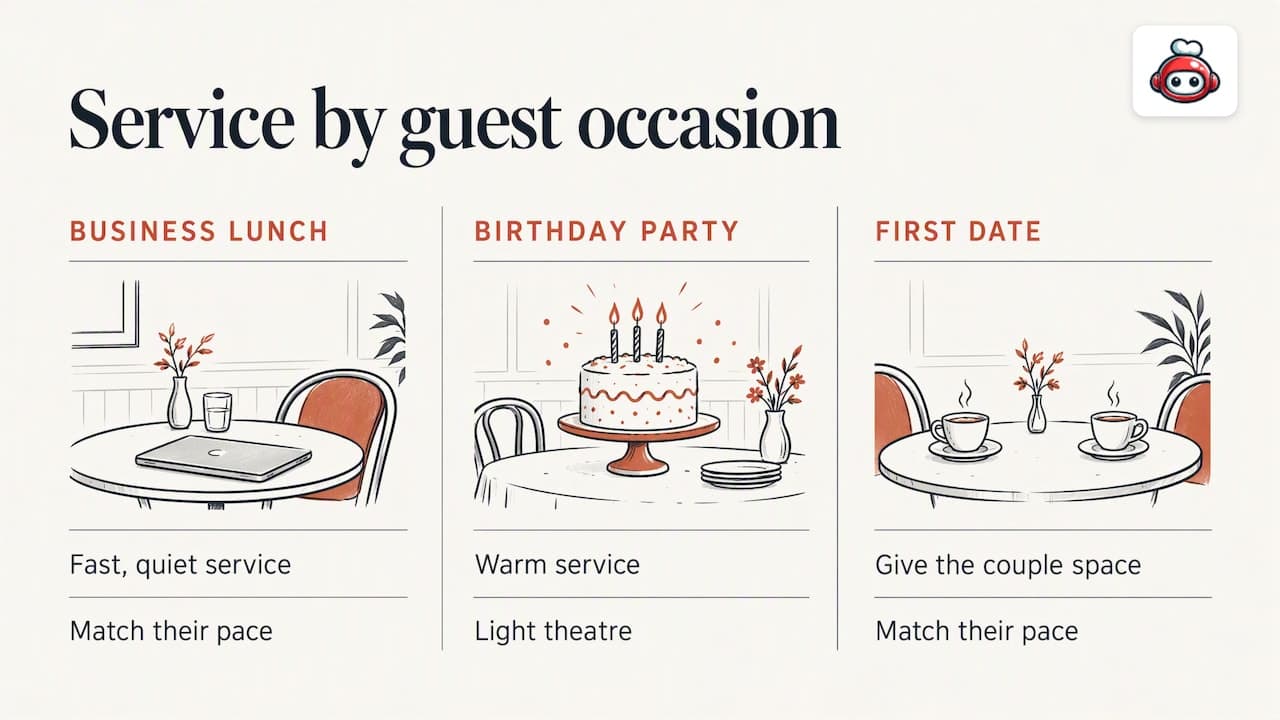
Cultural norms matter too. Some guests expect brisk, friendly chat, others prefer formal and reserved service. Tipping customs differ widely between countries, so a tourist may simply not know what is expected. A calm, neutral mention of the tip screen helps without pressure.
If a table speaks another language, a few respectful phrases go a long way. This Mandarin phrase guide for hospitality staff offers short scripts for greetings and the bill.
Regulars deserve their own approach. Remembering a preferred table, drink or dietary need shows attention, and regular customers can influence tipping behaviour. Treat first-timers as future regulars and use their name once, naturally.
7. How do you handle difficult guests without losing the tip?
Stay calm, slow your speech and lower your voice. Use a three-step reset:
- Listen fully. Let the guest finish without interrupting.
- Repeat the problem back. "The steak came out well done and you asked for medium. I'm sorry, that's on us."
- Offer one clear fix, with an estimated time. "I'll check with the kitchen and let you know how long it will take."
Mirroring helps here too, because a guest who feels heard softens. Do not argue about who was right. Fix the problem, check back once, and hand the table back to normal service.
Some guests will not be won over, and poor service can lower tips, so do not let one bad table drag the next one down. Take a breath in the corridor, reset your smile and move on. If a table is abusive, bring in your manager early.
8. Can loyalty programmes help you earn more tips?
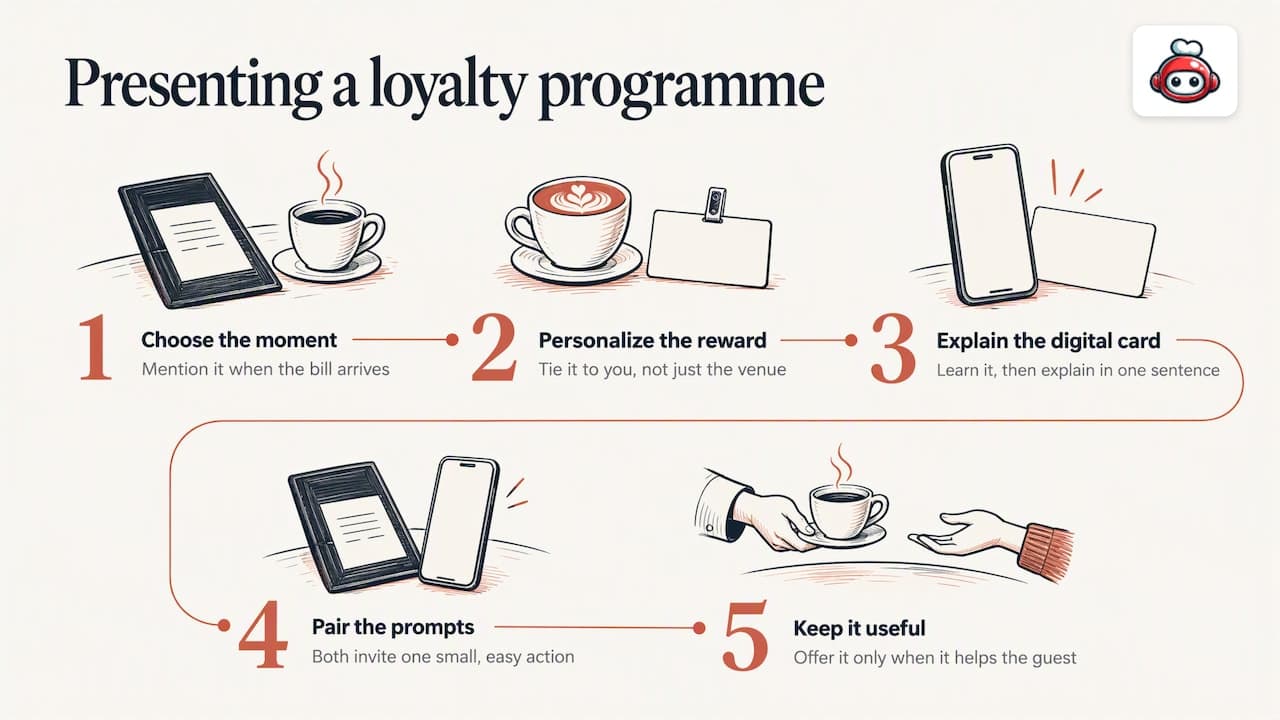
Loyalty and tipping reinforce each other. A guest who earns points or stamps for returning is more likely to sit in your section again, and regular customers can influence tipping. Your job is to make the programme visible and personal.
Mention it at the right moment: when the bill arrives, say "You've earned a free coffee on your next visit, and I'll be here Thursdays." Tie the reward to a person, not just a venue, so guests ask for you by name.
Digital loyalty cards that live in a phone wallet remove the friction of paper cards. If your venue runs one, learn how it works so you can explain it in one sentence. If it does not, suggest it to your manager. Pair a loyalty prompt with your tip prompt, because both ask the guest to commit to a small, easy action.
Keep it genuine. A guest who feels sold to will not warm to you, so offer the programme only when it helps them.
9. What do experienced servers say actually works?
My best night came from two habits. I started repeating orders back word for word, and I brought a small gift with the bill instead of mid-meal. Within a few weeks, tables lingered longer and thanked me by name. It felt less like a trick and more like paying attention.
Digital tipping solved a quieter problem. Guests used to say "sorry, I've got no cash", and that tip simply vanished. Now a QR code on the bill folder catches those gratuities.
My advice: change one thing at a time, note your average tip each week, and keep what moves the number.
*— ADMIN*
10. Start collecting commission-free tips with us
Hospitality workers can set up an individual tipping profile with us and receive tips directly through a QR code, with no commission from us.
- Create your profile on our online tips page.
- Share your QR code at the table.
You can sign up even if your venue is not on RESTOBOT, and you set your payout schedule in the payment provider.
FAQ
What's a good tip for a waiter?
A good tip is one that reflects the service and the norms of your country or venue. Customs vary widely, so check local guidance or ask staff if you are unsure. Very good service raises tips, as survey research shows.
What are the five things a waiter must have?
Menu knowledge, a sincere smile, good listening, a sense of timing and calm under pressure. Competence matters most: 45% of surveyed guests rank it as the strongest reason to tip.
Does a free drink with the bill really raise tips?
Experiments suggest it can. One study reported up to a 25% uplift when the gift arrived with the cheque rather than earlier. Check your venue's policy first.
Are taxes on tips something I should plan for?
Taxes on tips are the worker's own responsibility.