

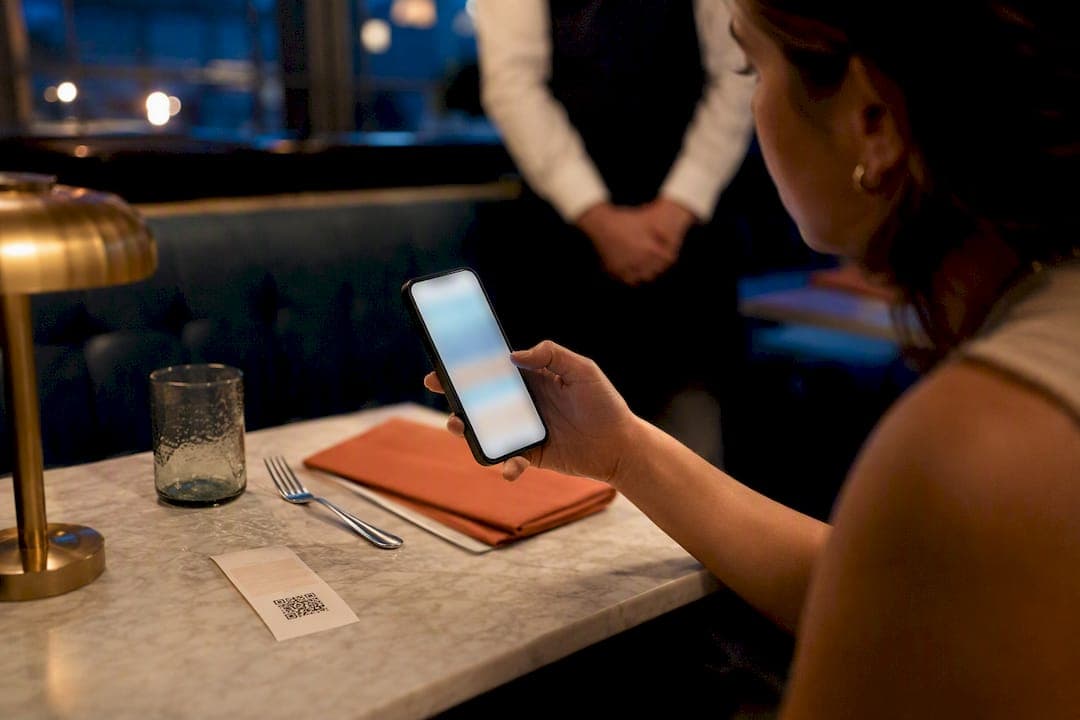
Three platform types cover waiter ratings online: restaurant-integrated feedback systems tied to a specific visit, standalone staff-portfolio apps that let servers build a personal reputation, and general review sites like Yelp where service gets mentioned alongside food and ambience. Diners chasing a quick, meaningful rating should use whatever QR code or profile link the restaurant or server actually provides. Managers evaluating a system should trial one with verified ratings and a private dashboard before making anything public; understanding the role of customer reviews in hospitality is key to selecting the right solution.
***
TL;DR:
>
- Verified ratings tied to actual visits and clear proof reduce the impact of fake or malicious reviews, ensuring more reliable staff performance data. - Staff portfolios and independent tipping profiles help servers build a portable, reputation-focused history that follows them across jobs without employer interference. - Setting a minimum sample size, such as dozens of reviews, prevents single poor nights from disproportionately affecting individual ratings. - Managers should pilot rating systems privately for one to three months and require a threshold before publishing staff scores publicly to avoid damaging morale. - Integration with POS systems and transparent tip routing options, along with clear privacy policies, are essential to ensure trust and compliance when adopting waiter rating platforms.
***
Table of Contents
- How Do Online Waiter Rating Systems Actually Work?
- Who Actually Benefits From Rating Waitstaff?
- What Are the Real Pros and Cons of Waiter Rating Apps?
- How Should You Choose a Waiter Rating Platform?
- How Do You Roll Out Waiter Ratings Without Hurting Morale?
- Are There Legal Issues With Collecting Waiter Ratings?
- How Do You Get More Diners to Actually Leave Ratings?
- How Should Managers Handle Negative or Fake Ratings?
- Why Verified, Visit-Tied Feedback Beats Anonymous Apps
- Give Your Staff a Commission-Free Way to Collect Ratings and Tips
- Sources
- FAQ
How Do Online Waiter Rating Systems Actually Work?
Most systems follow the same basic path, even though the details vary by provider. A diner scans a QR code on the receipt, table tent, or check presenter, which opens a short form asking for a star rating, a comment, and sometimes a tip amount tied to a specific server rather than the restaurant as a whole.
The mechanics that matter most are verification and visibility. Verification ties the rating to proof that a visit actually happened, whether that's a receipt number, a reservation match, or a time and location stamp. Spokk builds its staff feedback around post-visit forms that aggregate into per-server averages, which a manager sees on a dashboard rather than the public.
Where the rating ends up depends entirely on the platform's design:
- Manager-only dashboards: scores stay internal, used for coaching and scheduling decisions.
- Public staff profiles: the rating becomes part of a portfolio the server controls, visible to anyone with the link.
- Employer-only reports: aggregated data with no individual comment ever surfacing publicly.
Tipping flows split the same way. Some tools route the tip straight to the worker's own account with no restaurant involvement, while others send funds through the restaurant's payment system for later distribution. The Served app leans into the portfolio model, letting servers collect QR-linked reviews that build a verified history independent of any single employer.
Who Actually Benefits From Rating Waitstaff?
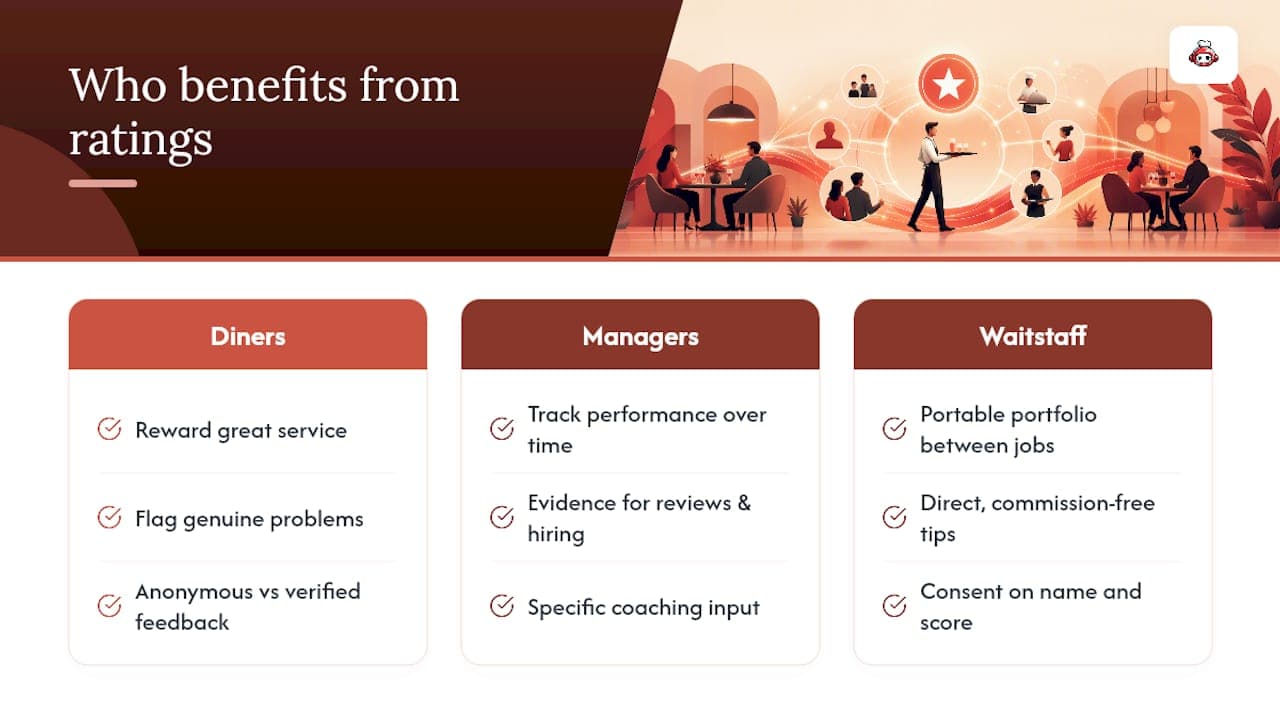
Waiter ratings online serve three different groups, and each one wants something different out of the same star and comment.
Diners get a fast way to reward great service or flag a genuine problem, and the choice between anonymous and verified feedback matters here: anonymous comments feel safer but carry less weight, while a verified, receipt-tied review actually moves a server's average.
Managers get three things at once: an operational metric they can track over time, evidence for performance reviews or recruiting, and a coaching input that's more specific than a vague "the service was slow" comment from a table.
Waitstaff get the biggest structural shift. A portfolio that follows them between jobs, plus a direct, commission-free tip collection method, turns customer service scores into something portable instead of something that disappears when they change restaurants. Consent matters here too. Staff should know before a rating system launches whether their name and score will ever be public.
What Are the Real Pros and Cons of Waiter Rating Apps?
The upside is concrete. Targeted feedback tells a server exactly what worked, recognition arrives faster than an annual review, and a verified rating history becomes real evidence during hiring. Goler's approach of separating risk and quality signals shows why segmented feedback beats one blended number: a server can score high on friendliness and low on speed, and a single average would hide that entirely.
The downside is just as real:
- Unfair comparisons across service styles. A fine-dining server working four tables a night gets judged on a different scale than someone running fifteen tables at a diner.
- Public shaming risk. A single bad night, posted publicly and permanently, can outweigh months of solid work.
- Privacy exposure. Comments sometimes include details that identify a customer or a staff member in ways neither expected.
Mitigation is straightforward: benchmark by service style rather than a universal scale, set a minimum sample size before treating any score as meaningful, and keep new data manager-only until the pattern stabilizes.
Pro Tip: *Don't publish an individual server's rating until it's built on at least a few dozen entries. A single one-star review from a bad night can distort an average that would otherwise look different after more reviews accumulate.*
How Should You Choose a Waiter Rating Platform?
The checklist comes down to six questions, and most platforms will answer them if you ask directly:
- Who can actually read individual comments, and can that access be limited to managers?
- How are reviews verified, and is verification easy for guests to skip?
- What minimum sample size does the platform require before showing a staff rating publicly?
- Does it integrate with your POS or reservation system, so ratings tie to real shifts and real transactions?
- Can staff opt in, dispute a review, or request removal of clearly false feedback?
- How are tips routed, and does the platform take a cut?
Curateria's scoring model is worth studying here, since it builds a composite from five weighted sub-scores, including Service and Positivity, and flags listings with too few reviews to be reliable rather than displaying a misleadingly confident number.
Red flags are just as telling as good answers. Walk away from any platform with unclear tip routing, a public leaderboard with zero context about sample size or service style, or terms that let the company resell personal guest data. If a sales rep can't answer "who sees the comments" in one sentence, that's the answer.
How Do You Roll Out Waiter Ratings Without Hurting Morale?
A rushed launch is how good systems get resented before they get useful. The fix is a slow, private start.
- Pilot privately for approximately one to three months. Let managers see the data before staff or guests do, so you can catch broken flows early.
- Set a publish threshold. Require a minimum number of ratings before any staff average goes public or even gets shared with the employee.
- Use scores for coaching first. Pair every rating trend with a one-on-one conversation, not a posted leaderboard.
On the technical side, place the QR code somewhere a guest naturally looks, the check presenter or table tent works better than a wall poster, and tie each rating to a transaction or shift ID so the data can be cross-referenced with actual POS sales per server. Test the tipping flow yourself before launch, and tell staff exactly how the numbers will be used before the first guest scans anything.
Pro Tip: *Run the whole system internally for a full billing cycle before telling guests it exists. You'll catch the bugs and the awkward wording nobody thought to check.*
Are There Legal Issues With Collecting Waiter Ratings?
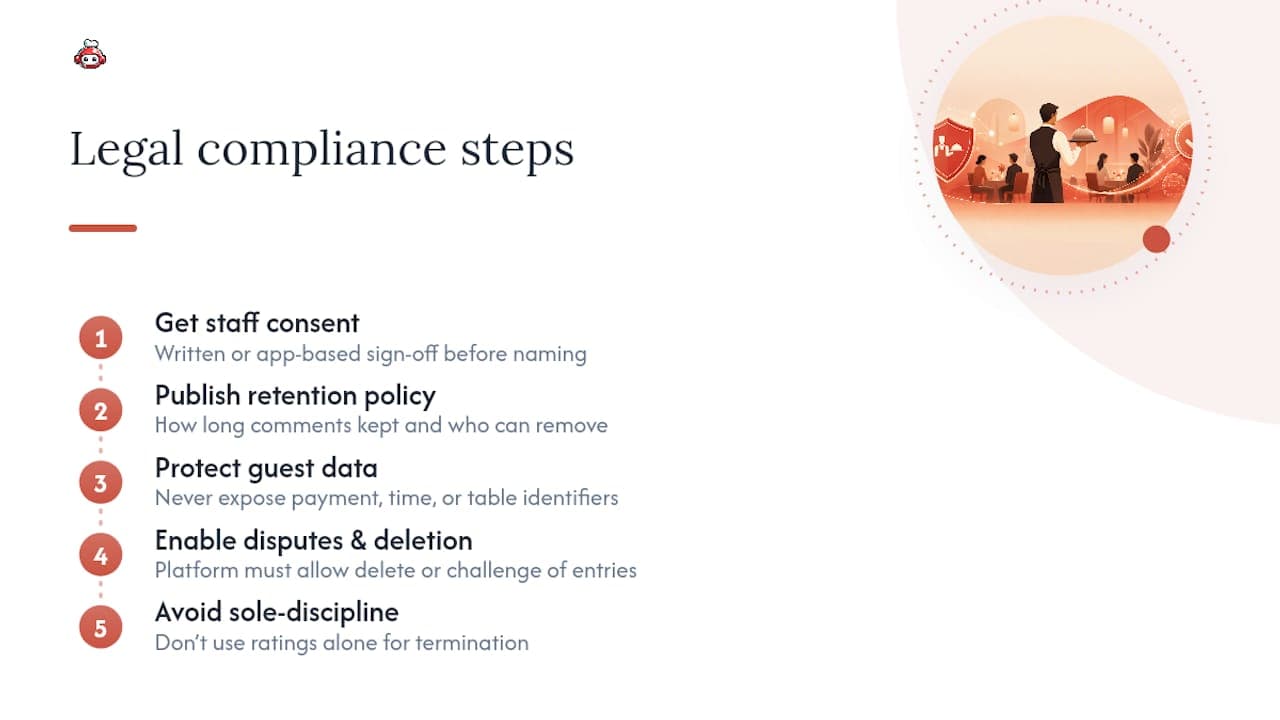
Publishing a named employee's performance data touches privacy law in ways a generic restaurant review doesn't. Many jurisdictions treat an individual's name tied to a performance score as personal data, which means consent, data retention limits, and a right to correction or deletion can all apply depending on where the restaurant and the guest are located.
Practical compliance starts with three habits: get written or app-based consent from staff before their name appears in any public rating, publish a clear policy on how long comments are stored and who can request removal, and never expose a guest's personal details (payment info, exact visit time, table number) in a way that could identify them from a public review. Employers should also think about employment law implications. Using ratings as the sole basis for discipline or termination without documented context can create liability, especially if the rating system has no verification step to rule out fake or malicious entries.
None of this requires a legal department to get right. It requires a written policy, staff sign-off before launch, and a platform that lets you delete or dispute a clearly false entry rather than one that treats every submission as permanent. Reading a platform's reviews policy before adopting it is a reasonable first step, since the same principles that govern public review platforms apply to staff-facing ones.
How Do You Get More Diners to Actually Leave Ratings?
Most guests don't rate a server unless something goes wrong, which skews the data toward complaints. Closing that gap takes a small nudge, not a hard sell.
A modest, transparent tip incentive works better than a discount code buried in fine print: a QR code that says "rate your server and tip directly, no fee taken" gets more genuine engagement than a generic "leave us a review" ask, because the guest sees an immediate, tangible reason to participate. Gamification helps when it's light. A simple thank-you message after submission, a visible tally of "you're this server's 47th review this month," or a small loyalty point tied to a completed rating all raise completion rates without turning feedback into a contest.
What doesn't work: public leaderboards ranking servers against each other, since that pressures staff to solicit ratings aggressively and can push some toward asking only satisfied tables to scan the code, which quietly corrupts the sample.
Timing matters too. A prompt that appears the moment the check arrives, while the visit is still fresh, converts far better than a follow-up email sent the next day. Pairing the rating prompt with a loyalty program, the kind tied to a digital wallet card, gives guests a reason to come back and rate again on their next visit, building a data set over time instead of one-off snapshots.
How Should Managers Handle Negative or Fake Ratings?
The first move is verification, not defense. Check whether the rating ties to an actual visit, a receipt, reservation match, or timestamp. A platform without that step invites exactly the kind of fake or retaliatory review that damages morale for no operational reason.
When a negative review is real, respond to the pattern, not the single incident. One bad rating from a rushed Friday night doesn't need a policy change; five similar comments about the same server over a month does. Address it privately with the employee, using the rating as one data point among several, including direct manager observation.
When a review is clearly false, malicious, or posted by someone who wasn't actually present, most credible platforms offer a dispute or flagging process. Use it, and document why the entry was removed. A platform that offers no removal path at all, no matter how obviously fabricated the review is, should be a dealbreaker during vendor selection.
Public responses work differently than they do for restaurant-wide reviews. Never argue with a guest publicly about a named server's performance. If a public comment names an employee unfairly, a short, professional acknowledgment that the concern is being addressed internally protects both the guest relationship and the staff member's dignity. The detailed back-and-forth belongs in a private conversation, not a comment thread.
Why Verified, Visit-Tied Feedback Beats Anonymous Apps
Integrated systems that tie a rating to an actual receipt or reservation produce cleaner signals than standalone anonymous apps, because verification filters out the noise that makes a single bad rating look like a pattern. That said, transparency has limits. Early rollouts should stay manager-only, giving staff a chance to see their own trends before any guest or coworker does.
Commission-free tipping tied to a staff-owned profile solves the two biggest complaints workers raise about rating systems: fear of unfair public exposure and frustration over platforms that skim a cut from every tip. Get both pieces right, and the system builds trust instead of resentment.
*— ADMIN*
Give Your Staff a Commission-Free Way to Collect Ratings and Tips
There are platforms that combine ratings, tipping tools, and website building into a single solution for restaurants. Some platforms offer a Tips feature that lets hospitality workers create a personal profile with a QR code to collect guest ratings, comments, and tips sent directly to their own accounts with no commission from the platform. Workers may be able to use such tipping profiles independently of their employer’s platform, allowing them to start building a verified reputation on their own.
Platforms typically provide transparent tip routing, individual staff opt-in options, and unified analytics instead of scattered data across separate tools. Check out RESTOBOT to set up a staff tipping profile or launch a full restaurant site in a day.
Sources
FAQ
What Is the Best App for Restaurant Ratings?
For rating individual servers specifically, staff-portfolio apps like Served or RESTOBOT's staff Tips profiles work better than general review apps, since they tie feedback and tips directly to one person rather than the whole venue.
What Is the Best Online Review Site?
The best choice depends on what you're evaluating. General dining reputation runs through sites like Yelp, while operational, per-staff feedback needs a dedicated tool with verification and manager dashboards built in.
Who Are Some Popular Food Critics?
Food criticism traditionally comes from professional reviewers at newspapers and magazines rather than rating apps, and their published reviews focus on cuisine and overall experience rather than individual server performance, which is where waiter-specific rating tools fill a different gap.
How Do I Rate a Waiter Online?
Scan the QR code the restaurant or server provides on the receipt, table tent, or personal profile link, then submit a star rating, a comment, and an optional tip through the short form that opens.