

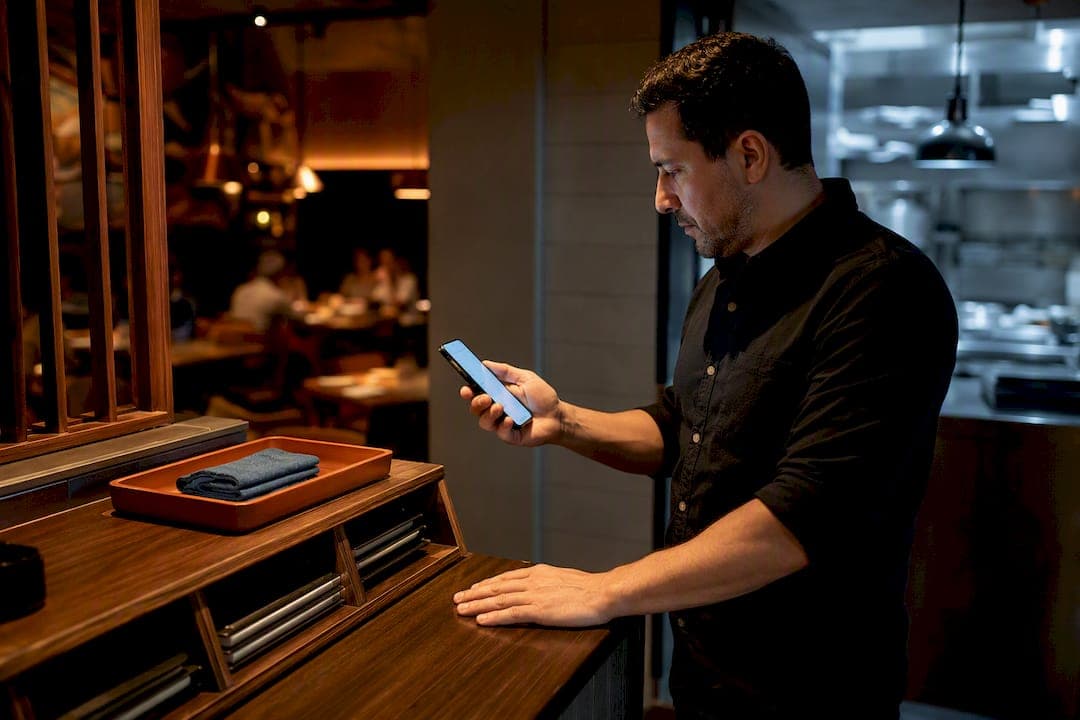
Make your ordering link impossible to miss, and put a QR code on every single order that goes out the door. Those two moves alone will move more direct orders than most six-month marketing plans. Layer in a fast mobile checkout and an email or text follow-up to first-time buyers, and you have a real system. An ordering system can be set up quickly to skip the setup grind.
***
TL;DR:
>
- Prioritize fixing mobile checkout speed, page load times, and clear QR placement before investing heavily in online advertising or content promotion. - Place your order link prominently on your website, social bios, Google profile, and on all physical packaging to maximize direct orders. - Use in-restaurant touchpoints like QR codes, loyalty offers, and staff prompts to convert one-time orders into repeat business. - Implement a unified platform that handles website creation, contact capture, loyalty, and order management to accelerate setup and streamline operations. - Focus on operational improvements first; marketing efforts will be less effective if the ordering process is slow or confusing for customers.
***
Table of Contents
- How Do You Promote Online Ordering for Your Restaurant?
- Website and Ordering UX: The Mobile-First Flow That Converts
- Where Should You Put Your Ordering Link, and How Do You Measure It?
- In-Restaurant Touchpoints That Turn One-Time Orders Into Regulars
- What Promotions Actually Get Customers to Switch to Direct Ordering?
- How Do You Keep Marketplaces and Direct Ordering From Colliding?
- Why an Integrated, Commission-Free Platform Speeds This Up
- Most Restaurants Are Optimizing the Wrong Layer
- Ready to Put This Into Practice?
- Sources
- FAQ
How Do You Promote Online Ordering for Your Restaurant?
Most restaurants treat online ordering as something that just exists on the website, then wonder why marketplace commissions keep eating margin. Promoting online ordering means actively pushing customers toward your own channel at every touchpoint, not waiting for them to stumble onto it. The off-premises dining segment has become a dominant piece of restaurant revenue, which means the channel you promote it through determines whether you keep 100% of that money or hand 30% to a delivery app.
Here's the prioritized list for the first 90 days, ranked by effort versus payoff:
- Put your order link in the top navigation, your Google Business Profile, and every social bio. Not buried in a menu tab.
- Print QR codes on every bag, box, and receipt, linking straight to your ordering page.
- Fix mobile checkout first. Most orders come from phones, and a slow or clunky flow kills conversions before payment.
- Capture a name and phone number or email at checkout, even for guest orders. This is the foundation of any reorder strategy.
- Build a basic automated sequence: a thank-you message after the first order, a nudge after two weeks of silence.
- Offer a small, specific incentive for the first direct order. Real menu photography, clear QR placement, and reorder messaging are the tactics live operators cite most often as the highest leverage.
- Keep marketplace listings active for discovery, but design every printed touchpoint to pull repeat customers back to your own site.
- Track four numbers weekly: direct order count, average order value, repeat rate, and cart abandonment.
- Run one A/B test per month. Swap CTA button color, or test "Order Now" against "Skip the Fees, Order Direct."
- Review the data every Friday and kill whatever isn't converting.
Website and Ordering UX: The Mobile-First Flow That Converts
A restaurant website is not a brochure. It's a funnel, and every extra tap is a leak. Adding a prominent order button, cutting load time, and simplifying checkout are the three highest-impact fixes most operators can make without touching their budget.
Here's what a converting flow actually looks like:
- The "Order" button sits in the header and stays visible (sticky) as the customer scrolls the entire site.
- The menu is built in native HTML, never a PDF. PDFs don't resize for phones and force pinch-zooming, which is where impatient customers give up.
- Pages load in under two seconds. Every additional second past that costs you completed orders.
- Every dish has a real photo, shot consistently, with modifiers and default options pre-selected so customers aren't guessing what "the usual" build includes.
- Apple Pay and Google Pay are available at checkout, cutting the payment step down to one tap.
- Contact capture happens quietly, tied to order confirmation rather than a wall before checkout.
- Prep times shown to the customer match kitchen reality, and any item that's out gets pulled from all channels in one action, not five.
Pro Tip: *Test your own ordering flow on your phone, on cellular data, not office WiFi. That's the connection most of your customers are actually using, and it exposes load-time problems a fast connection hides.*
Where Should You Put Your Ordering Link, and How Do You Measure It?
Visibility is half the battle. If the link isn't where customers already are, they won't go looking for it.
- Add the ordering link to your Instagram and TikTok bio, and pin it in a story highlight labeled "Order Now."
- Use shoppable post tags on food photos that lead straight to the relevant menu item, not your homepage.
- Claim and complete your Google Business Profile, then add the direct "Order" link so it appears before any third-party delivery button.
- Run a small geo-targeted social ad test: a $50 to $100 weekly budget, a 3 to 5 mile radius, and a landing page that goes directly to a specific promoted dish rather than your general menu.
- A local marketing partner like HarbourSide Digital can help set up that first paid test if you'd rather not run it solo.
- Tag every link with UTM parameters so you can see, channel by channel, what your actual cost per order looks like.
Skip the vanity metrics. Follower counts don't pay rent. Cost per acquisition by channel does.
In-Restaurant Touchpoints That Turn One-Time Orders Into Regulars
Your physical space is a marketing channel you're already paying for. Use it.
- Put a QR code on every bag, every receipt, and every table tent, each one pointing to your ordering page with a specific, time-limited incentive attached.
- Slip a bag card or receipt insert into takeout orders offering a small credit toward the next direct order, valid for two to three weeks.
- Train staff to mention it at pickup: "Next time, order straight from our site and skip the delivery fee." A one-line script, said consistently, works better than a poster nobody reads.
- Keep the QR print size at least 1.5 inches square, placed where a customer's eyes naturally land, not tucked in a corner or buried under a logo.
A detailed QR setup guide walks through placement specs if you want to get this exactly right the first time.
What Promotions Actually Get Customers to Switch to Direct Ordering?
It trains customers to expect a discount forever and quietly erodes your margin on every order after.
- Offer a small, fixed credit (not a percentage) as a welcome reward for a customer's first direct order.
- Roll out a digital loyalty card through Apple Wallet or Google Wallet so the reward sits on a phone customers already carry, not a punch card that gets lost.
- Send an automated SMS reminder when a cart is abandoned, and target your highest-lifetime-value diners with a specific reorder nudge, not a blanket blast.
- Push bundles and suggestive upsells ("add a drink for $2") instead of discounting the whole order. Small, targeted incentives paired with automated re-engagement outperform flat percentage discounts on margin over time.
RESTOBOT's loyalty and retention tools plug wallet-based rewards directly into the ordering flow, so the incentive shows up automatically instead of relying on a customer remembering a promo code.
How Do You Keep Marketplaces and Direct Ordering From Colliding?
Marketing gains fall apart fast if the kitchen can't keep up with two order streams at once.
- Keep marketplace listings live for discovery, since strategic coexistence beats abandoning them, but route every order, marketplace and direct, into one kitchen tablet so nothing gets missed.
- Build in a realistic prep-time buffer, and update the quoted time manually during a rush instead of letting a stale default promise a 15-minute pickup during a 40-minute Friday night.
- Set up one-tap item removal ("86'ing") that pulls a sold-out dish from every channel simultaneously. A delivery management setup that syncs courier and direct orders in one dashboard removes most of this friction automatically.
- Track refunds and cancellations weekly, and log the reason for each one. A pattern of "item unavailable" refunds usually points straight back to a menu sync problem, not bad luck.
Why an Integrated, Commission-Free Platform Speeds This Up
Every tactic above requires a system underneath it: a website, a way to capture contact info, a loyalty mechanism, and a dashboard that doesn't require three logins. All-in-one platforms bundle multiple features into a single build, with a site created automatically upon application confirmation, plus omnichannel ordering, wallet-based loyalty cards, and a Tips feature staff can use independently of the restaurant's own account.
A practical 30-day rollout looks like this:
- Week 1: Get the RESTOBOT site live and menu photography uploaded.
- Week 2: Print and distribute QR codes on bags, receipts, and table tents.
- Week 3: Turn on contact capture at checkout and set up the first automated reorder message.
- Week 4: Launch one small paid social test and review your first week of direct-order data.
Most Restaurants Are Optimizing the Wrong Layer
The conventional advice treats online ordering promotion like a marketing problem: better photos, better ads, a snappier Instagram bio. That's not wrong, but it's second-order. The bigger issue sits in operations. A restaurant with a mediocre Instagram feed and a bulletproof checkout will beat a restaurant with gorgeous content and a slow, confusing order flow, every time.
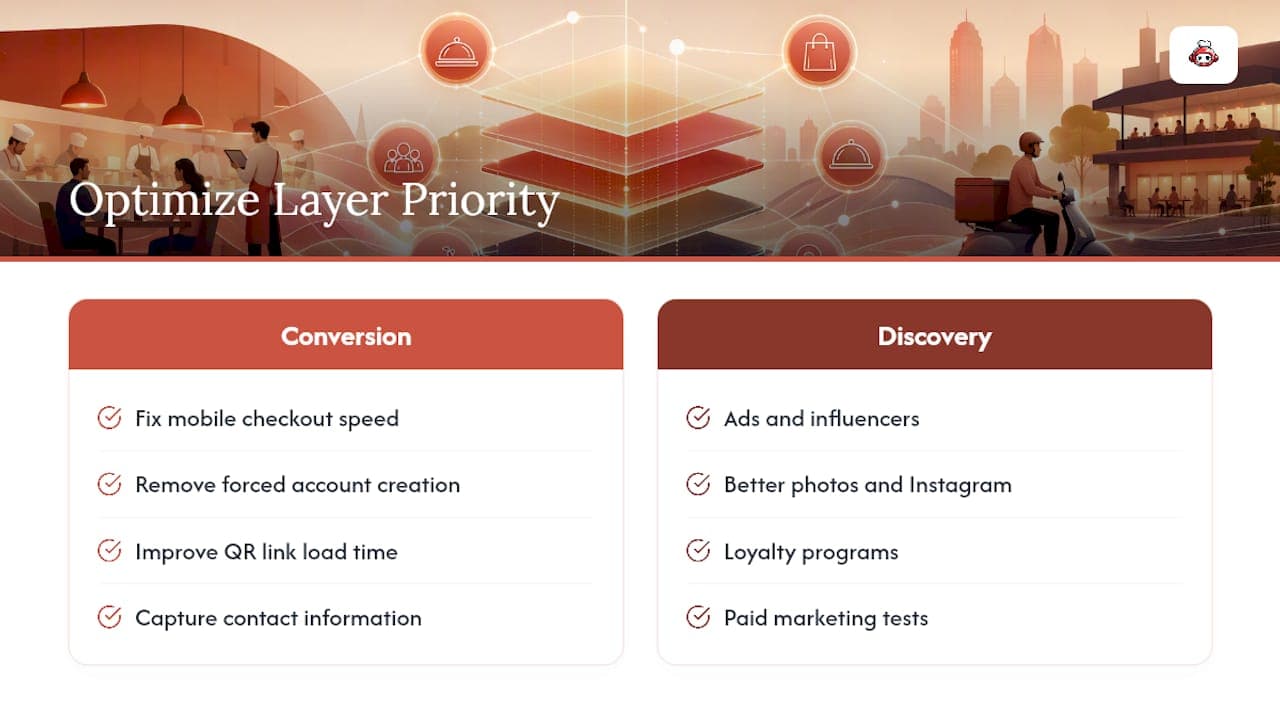
What the data actually supports is boring: fix the friction first, then promote. A QR code on a bag is worthless if the link it opens takes six seconds to load on a phone with two bars of signal. An email reorder campaign is worthless if the checkout still demands an account creation before payment.
Where most owners get it backward is spending on discovery (ads, influencers, social content) before fixing conversion (speed, checkout, contact capture). Fix the leaky bucket before you pour more water in. Start with the mobile checkout and the QR distribution. Everything else, the loyalty programs, the paid tests, the influencer outreach, works better once that foundation is solid, and most of it barely moves the needle without it.
*— ADMIN*
Ready to Put This Into Practice?
Everything in this playbook, the QR codes, the CRM capture, the loyalty cards, the mobile checkout, works faster when it's built on one platform instead of stitched together from five separate tools. Some platforms set up a working website with embedded ordering quickly upon application confirmation, charging a flat subscription without commissions on orders placed through own channels.
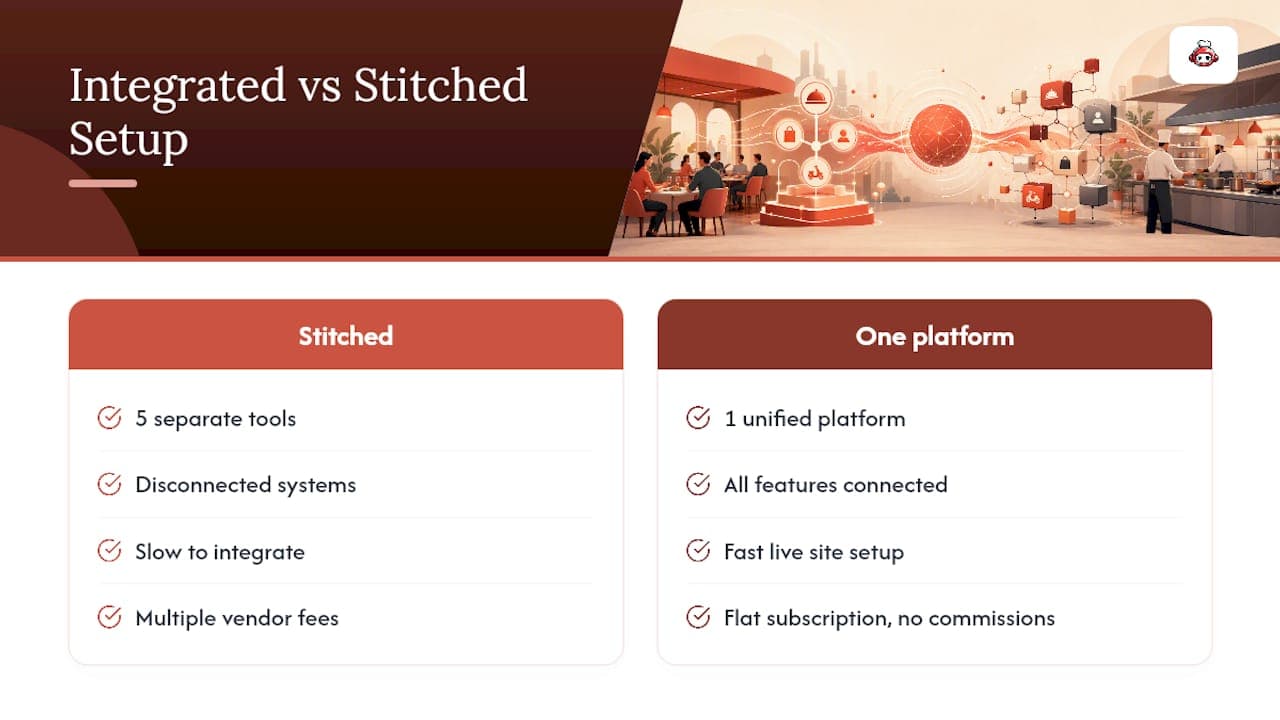
Getting started means requesting a demo, seeing your site created live, and running through a short migration checklist for your existing menu and photos. From there, the realistic move is a 30-day test using the checklist above: get the site live, print your QR codes, turn on contact capture, and launch one small campaign. Book a demo with RESTOBOT and see what your ordering page looks like before you commit to anything.
Sources
FAQ
What Is the 30/30/30 Rule for Restaurants?
There's no single agreed-upon definition of a "30/30/30 rule" in restaurant operations. If you've seen the term used, it typically refers loosely to cost allocation (food, labor, overhead) rather than a formal online ordering standard.
Why Do Restaurants Prioritize Online Orders?
Off-premises dining, takeout, delivery, and curbside now make up a dominant and growing share of restaurant revenue, and every order placed through a restaurant's own channel avoids the 30% or higher commission marketplaces typically charge.
How Do I Attract More Customers to My Restaurant?
Start with visibility (an order link on your site, social bios, and Google Business Profile), then add QR codes at every physical touchpoint and a simple reorder message for past customers. A platform like RESTOBOT can get the website and ordering system running in a day so you're not waiting weeks to test any of it.
How Do I Attract Online Customers Specifically?
Make the ordering link unmissable across every channel you already use, fix your mobile checkout speed, and follow up with an automated email or text after someone's first order to bring them back for a second one.
Should I Drop Delivery Marketplaces Entirely?
No. Marketplaces still work well for discovery among new customers, but the smarter move is steering repeat customers toward your direct channel with QR codes, loyalty rewards, and CRM messaging instead of abandoning marketplaces outright.